Faced With the Rising Right, Spain’s Left Is Struggling to Build a Common Front
Spanish deputy prime minister Yolanda Díaz has hailed a unity deal that will see the Left run together in July’s snap election. The deal hasn’t pleased everyone — but it could help keep the far right from power.
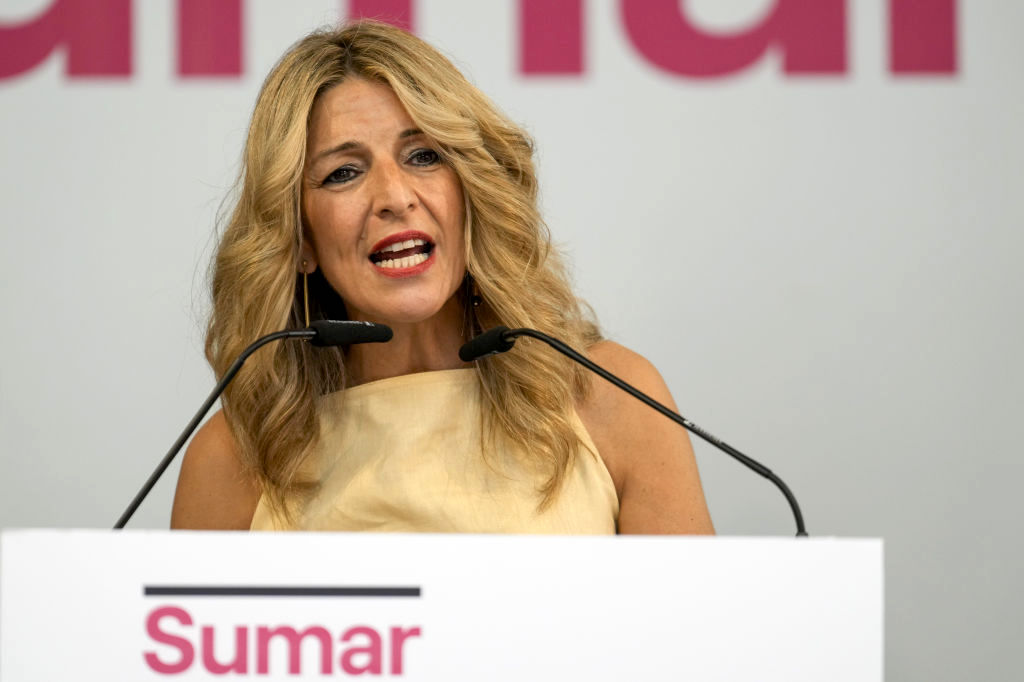
Yolanda Diaz, Spain’s deputy prime minister and leader of Sumar, speaks at the presentation of a coalition party agreement in Madrid, Spain, on June 10, 2023. (Paul Hanna / Bloomberg via Getty Images)
“Sumar has reached a historic agreement made possible by the generosity and responsibility of all the political forces that have joined it,” tweeted Spain’s deputy prime minister Yolanda Díaz, as the country’s fragmented left reached a last-minute deal to run together in July’s snap general election. In total, her new Sumar [or “Unite”] platform has managed to integrate fifteen left and green formations into an unprecedented joint electoral slate, which could tip the balance in favor of the country’s progressive bloc in the general election on July 23.
Yet despite the historic nature of the agreement, the atmosphere on the Spanish left was far from triumphal as the fallout over Podemos deputy leader Irene Montero’s exclusion from the joint list dominated the discussion. She was not the only member of Podemos’s leadership who was vetoed, as Díaz sought to impose a clear-out of Pablo Iglesias’s old guard from the Left’s front bench, in the wake of the party’s disastrous local and regional election results in May.
On Friday afternoon, just hours before the midnight deadline to register the electoral coalition was set to pass, Podemos’s current leader Ione Belarra called a press conference in which she announced that her party would sign up to Sumar “without an [acceptable] agreement” because of “the threat” to otherwise be excluded from the joint lists. “I am saddened that Yolanda Díaz is proposing that the agreement between Sumar and Podemos be built on the exclusion of a colleague [Irene Montero] who has been the architect of a generation of feminist rights [in her role as equality minister],” Belarra added.