Europe Is Finally Recognizing That Platform Workers Aren’t Self-Employed
Firms like Uber and Deliveroo systematically deny their workers basic rights by falsely treating them as self-employed contractors. Now Europe is finally passing legislation to recognize them as employees — and the UK should do the same.
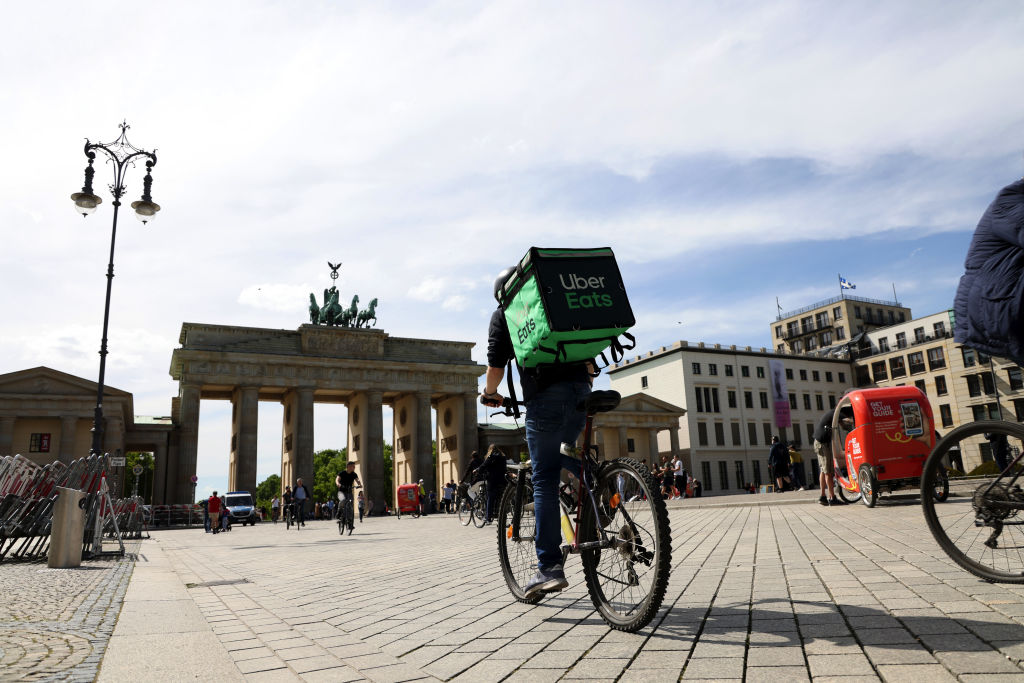
Last week, the European Commission proposed what some are hailing as the most pro-worker reform to come out of the European Union in years — a directive to regulate platform work. (Liesa Johannssen-Koppitz / Bloomberg via Getty Images)
Sometimes change comes from the most unlikely of places. The European Commission — the unelected body of technocrats that designs European Union legislation — isn’t exactly known as a friend of the worker. EU commissioners and their staff are more likely to be found having coffee with corporate lobbyists than rubbing shoulders with the working class.
Yet, last week, the EU Commission proposed what some are hailing as the most pro-worker reform to come out of the EU in years — a directive to regulate platform work. Often unfairly treated as self-employed, platform workers are now to be considered employees and thus entitled to the labor rights that are standard for most workers in Europe. The move also promises a new set of rights in relation to the algorithmic management of work.
This legislation wasn’t just delivered from on high. It has emerged in the context of an increasingly loud and effective platform workers’ movement — and a capitalist class divided about how to respond to the emergence of digital labor platforms.