The Conspiracy of the Algorithm
People aren’t wrong to feel like their lives are increasingly out of their control. Twenty-first-century technology guarantees it.
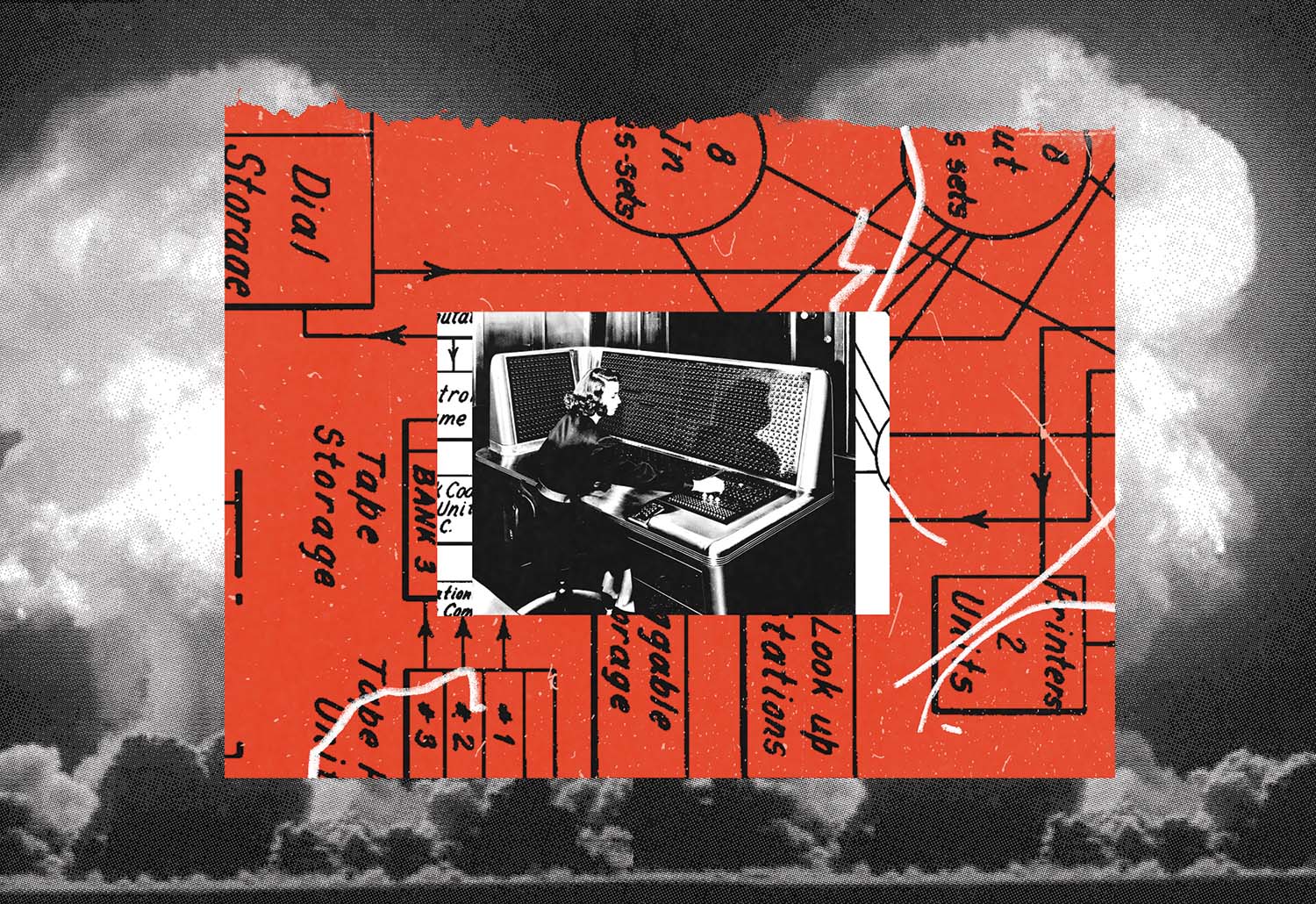
Illustration by Mark Harris
On January 27, 1948, IBM presented its latest computer to the American public in about as public a fashion as then possible. The company had leased a former ladies’ shoe store on East Fifty-Seventh Street, next door to its New York offices. Behind a large plateglass window, IBM installed its brand-new Selective Sequence Electronic Calculator, or SSEC, the first computer that could modify its own stored programs. It would be the last great electromechanical computer IBM would ever build, heralding the digital revolution just around the corner.
Crowds of pedestrians marveled at the SSEC for weeks, dubbing the machine “Poppa” for the jarring noises it occasionally produced, but mostly they came to wonder. For New Yorkers in 1948, it was certainly a sight to behold — the SSEC was huge and incredibly complex. It contained twelve thousand vacuum tubes and twenty-one thousand electromechanical relays, but it was also sleek and modern, its design heavily influenced by the Futurama exhibit at the 1939 World’s Fair. At the huge central control desk sat Elizabeth “Betsy” Stewart, from IBM’s Department of Pure Science, who directed every aspect of the computation and often appeared in publicity photos.
What the public didn’t know was what the machine was actually doing. After a few days of publicly announced calculations on behalf of NASA, data from which was never used, the machine was secretly turned over full-time to scientists from the Los Alamos National Laboratory, the birthplace of the atomic bomb. For the next several months, for twenty-four hours a day, seven days a week, in full view of the public but utterly obscured from it, the SSEC ran simulations of hydrogen bomb explosions. Its work led directly to the detonation of the first thermonuclear bomb by the United States, on the Marshall Islands in November 1952.