The Black Populist Movement Has Been Snuffed Out of the History Books
In the late 1800s, Southern black farmers built a mass movement to resist oppression. Though often forgotten today, the black populists and their acts of cross-racial solidarity terrified the planter class, who responded with violence and Jim Crow laws.
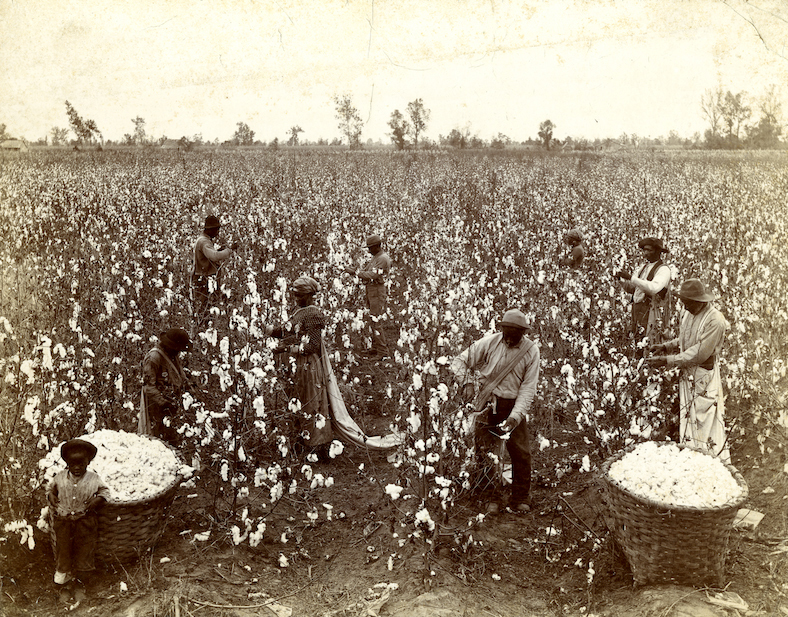
Tenant farmers picking cotton in Mississippi circa 1890. (Mississippi Department of Archives and History, Archives and Records Services Division)
When a black man named Oliver Cromwell began organizing local chapters of the Colored Farmers’ Alliance throughout Leflore County, Mississippi, and the surrounding area in 1889, both white planters and black farmers took notice, although for different reasons.
Founded in Houston County, Texas, just three years earlier, the Colored Farmers’ National Alliance and Cooperative Union, or “Colored Alliance” as it was more commonly known, quickly blossomed to over one million members across the South and beyond. The group offered self-help programs for black farmers, ran home ownership campaigns, argued for fair pricing, provided education programs on modern farming practices, educated farmers on their cooperative purchasing power, lobbied legislatures, and even launched strikes and boycotts.
In Leflore County, where three-quarters of residents were black, and two-thirds of those worked as sharecroppers, many formerly enslaved, Cromwell and the Colored Alliance offered the hope of upending the ruling planter class in the precarious years between the end of Reconstruction and the advent of Jim Crow.