Manchester’s Music Scene Dragged the City Out of Postindustrial Decline
Manchester in the 1980s was home to bands like Joy Division and the Smiths and a world-famous rave scene. The music rose from the conditions of life in postindustrial Manchester — and, ironically, it paved the way for a new wave of capital investment.
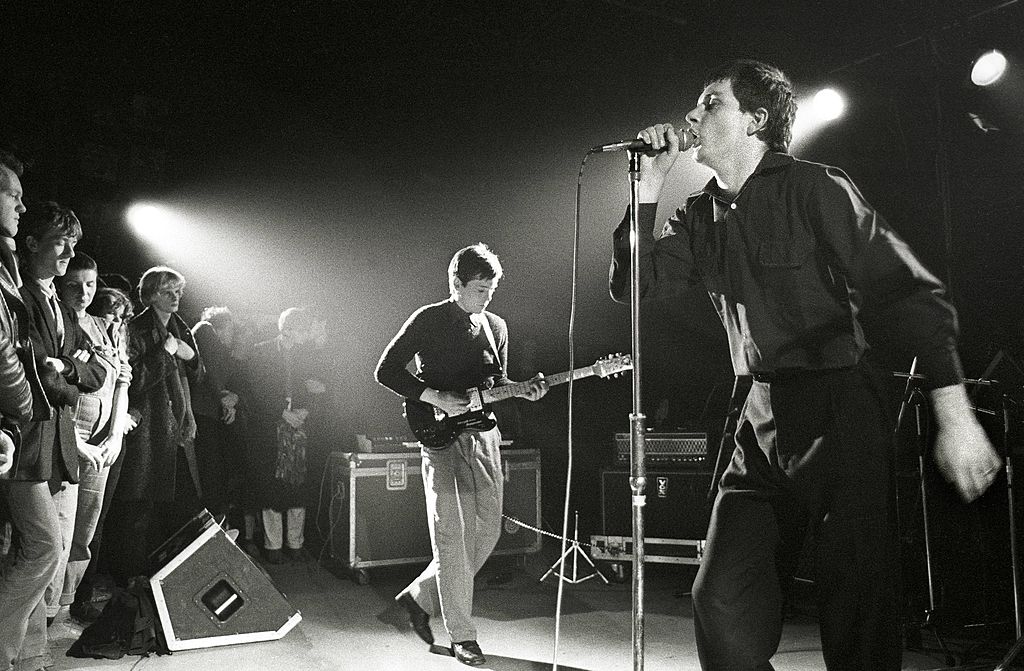
Joy Division performing live in Rotterdam, Netherlands, January 16, 1980. (Rob Verhorst / Redferns)
For only forty-five square miles of dampened land in North West England, Manchester has made an impressive mark. When a young Friedrich Engels was sent to Manchester to help run his family’s firm, the city gave him and his writing partner Karl Marx a unique window into the nascent industrial revolution. Manchester is widely known as the “world’s first industrial city,” but it was also home to many other firsts: the birthplace of women’s suffrage, the home of the first free public library, and the site of what was likely the first meeting of a general union representing workers in different industries.
When journalist Andy Spinoza arrived in 1979 to attend the University of Manchester, England’s first civic university, he stepped into a bleak postindustrial landscape. The city had lost one-quarter of its manufacturing jobs between 1966 and 1975. After university, Spinoza stayed in the city and spent the subsequent decades working as a journalist on the municipal and cultural beats, witnessing firsthand the transformation of postindustrial Manchester into a globalized metropolis sometimes dubbed Manc-hattan.
Spinoza’s new book Manchester Unspun: Pop, Property and Power in the Original Modern City documents this transformation and the subcultures that were made and unmade along the way. Amid the economic despair, Manchester gave rise to Joy Division, the Smiths, New Order, Happy Mondays, and more. A central figure in the Manchester scene was Factory Records owner Tony Wilson, a free-spirited quasi-Marxist and informal minister of culture whose nightclub the Haçienda became a symbol of the city, as well as an international destination in the late 1980s.