The Left Side of the Church
The church is responsible for a litany of injustices — and today Christian rhetoric is used to defend a violent neoliberal capitalism. But the glorious tradition of liberation theology can't be forgotten.
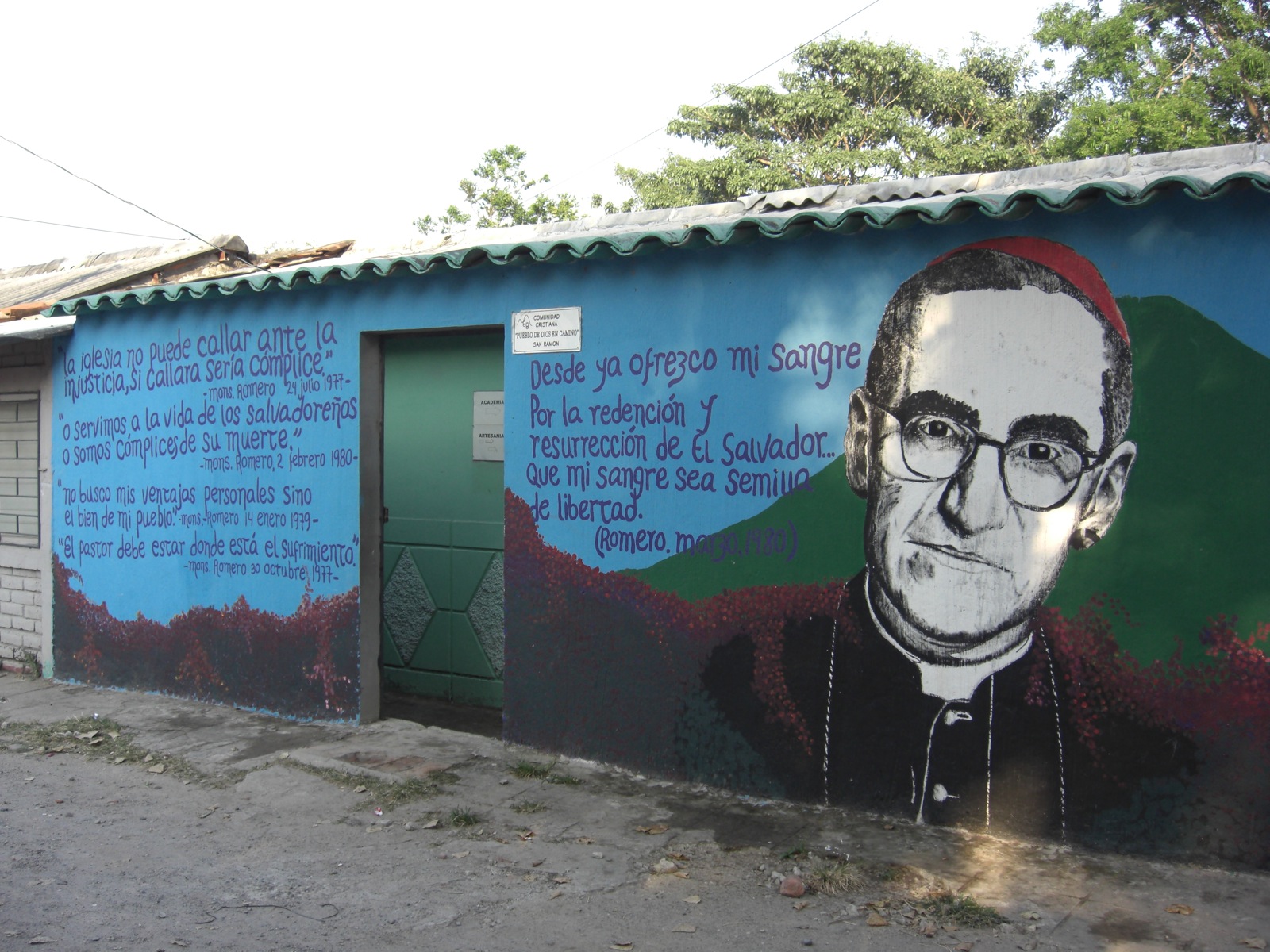
The entrance of the community building serves as a reminder and commemoration of the work and life of Archbishop Oscar Romero, Colonia Dolores, San Salvador, El Salvador.(Alison McKellar / Flickr)
The fiftieth anniversary of 1968 has occasioned much reflection on that pivotal moment in the twentieth century. If the quintessential image of that year of upheaval is students assembling barricades in the Paris streets, or protests at Berkeley against the Vietnam War, it was also marked by challenges to political and social power throughout the world. Curiously overlooked, however, is the gathering in Colombia of the Medellín Conference of Latin American Bishops — a pivotal event in the development of liberation theology throughout Latin America. The declarations of the conference broke new ground in expanding the notion of theological “liberation” to imply a positive humanizing process, and attacking the political, social, and economic structures that kept millions of Latin Americans poor and oppressed.
Recalling liberation theology’s rejection of the church’s traditional role as a bulwark of reaction and insistence instead on a “preferential option for the poor” takes on added importance given Jair Bolsonaro’s victory in last month’s presidential elections in Brazil. Appealing to the defense of “Christian civilization” as an ideological support for racism and class war from above, the president-elect echoes the rhetoric of the 1964–1985 military dictatorship — a regime he openly extols — along with the rationales advanced by figures like Jorge Rafael Videla and Augusto Pinochet for their mass murder of suspected dissidents across the continent.
A striking episode that brushes history against the grain of Bolsonaro’s fetishization of state and church is one from the dictatorship that he so fondly remembers. The young priest Frei Betto was arrested, tortured, and imprisoned in the early 1970s by that regime for his work helping leftist militants, including the Marxist writer, politician, and guerrilla fighter Carlos Margihella. Betto was castigated by his police interrogator: “How can a Christian collaborate with a Communist?”