The Anti-“Terrorist” Crackdown on Cop City Protesters Is the War on Terror Coming Home
The Biden administration’s domestic “war on terror” was sold as a crackdown on far-right extremists. But it’s left-wing activists and other dissidents, like Atlanta’s Cop City protesters, who are now facing repression and being labeled “terrorists.”
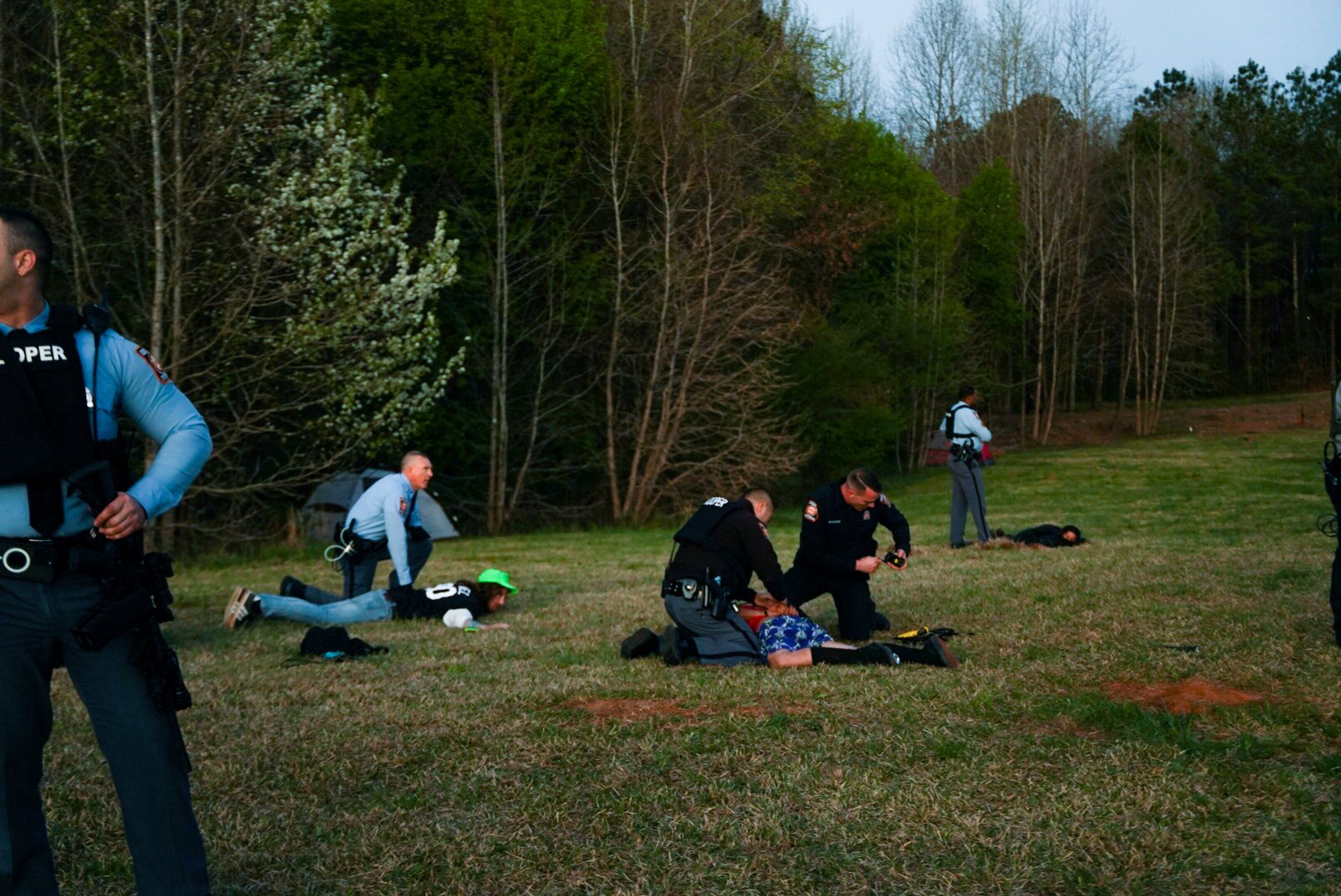
Protesters being arrested by police in Weelaunee Forest, Georgia. (Twitter via @HumanizingStory)
The “war on terror” may have receded from its centrality in American life only a few years ago, but the warping effect it’s had on US politics and culture appears here to stay. Since its inception, the framework of “terrorism” and the need to combat it has always had a domestic component. But recent years have seen the practice of labeling one’s political opponents as “terrorists” become normalized across the political spectrum, and the battle against them has become a matter of domestic policy and law enforcement.
The latest example is the battle over Atlanta’s “Cop City,” as it’s been called by activists, a $90 million Public Safety Training Facility in the city that has united a diverse array of left-leaning protesters in opposition, from anti-police demonstrators and anarchists to environmentalists concerned about the project’s destruction of a swath of forest whose preservation was guaranteed in the city constitution in 2017. After dozens of protesters entered the site on Sunday and threw bricks, rocks, fireworks, and Molotov cocktails (at least according to police, a charge that activists deny), police began arresting people later that evening at a nearby music festival, detaining thirty-five people and charging twenty-three of them with domestic terrorism, who are now looking at prison terms as long as thirty-five years.
This latest incident comes after an escalation of the situation in January, when police shot and killed a protester, twenty-six-year-old Manuel “Tortuguita” Terán, as part of a raid on the activists’ encampments, giving the young activist the ominous distinction of being the first environmental activist killed by police in US history. (Police say Terán shot at a state trooper first, but activists denied hearing two sets of shots, and no body-cam footage exists).