The Great Slave Strike That Helped End Slavery
Today, on Presidents’ Day, we rightly celebrate Abraham Lincoln for helping end slavery. But we shouldn’t forget the unstoppable force that also brought down the Slave Power: the several million slaves who left the plantation, many of whom joined the Union Army.
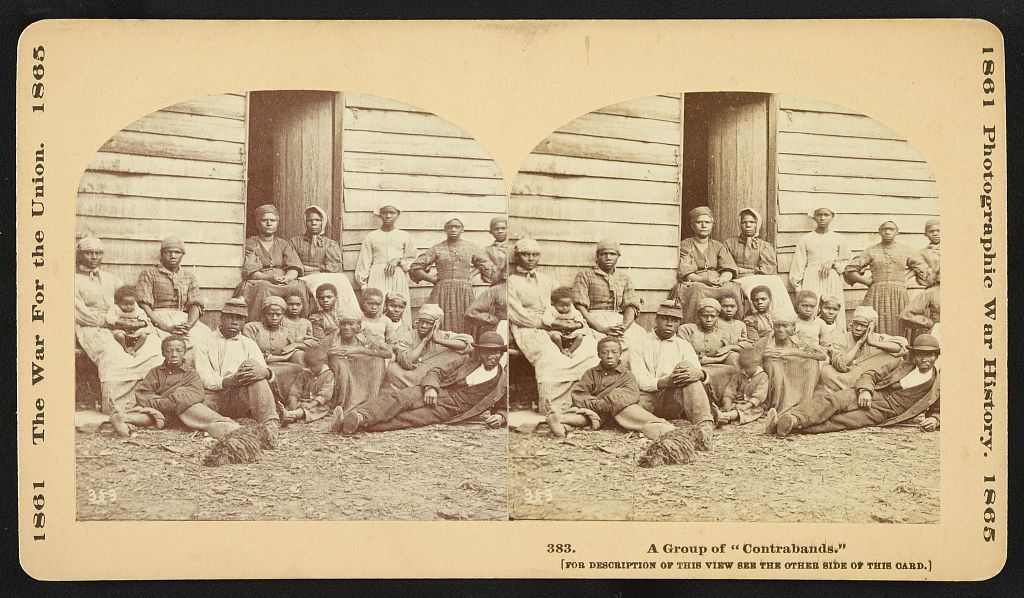
Stereograph showing a group of escaped slaves including men, women, and children gathered outside a building at the Foller Plantation in Cumberland Landing, Pamunkey Run, Virginia. May 14, 1862. (James F. Gibson / Library of Congress via Wikimedia Commons)
Several million slaves walked off their jobs over the course of the Civil War. As in most such disputes between workers and employers, the latter provided most of the documentation; the striking workers left little in the way of sources.
Yet we know that from the onset of the war, slaves were increasingly forthcoming about their views. On Christmas Eve 1861, Kentucky whites watched as sixty slaves paraded “singing political songs and shouting for Lincoln.” That winter, as white Unionists sabotaged railroad bridges in the Upper South, Confederate authorities also began blaming disgruntled slaves for arson. At year’s end they blamed unsupervised slaves encamped in Charleston for a fire that swept through the city, destroying hundreds of buildings.
Elsewhere in South Carolina, authorities followed rumors into a swamp where they found an encampment of runaways growing their own crops. Soon after, Confederates in Adams County, Mississippi, found that field slaves had stashed arms and supplies in a similarly isolated maroon. Even as slaveholders repeated rumors of armed slave insurrections, they reported remarkably more pragmatic plans, such as that for “a stampede” of a hundred slaves into the wilderness or toward Union lines.