Muhammadu Buhari’s Administration Was Never Progressive
When Nigerian president Muhammadu Buhari came to power in 2015, some hoped his administration would enact a left-populist agenda. A close examination of his administration’s ideological roots reveals that was always wishful thinking.
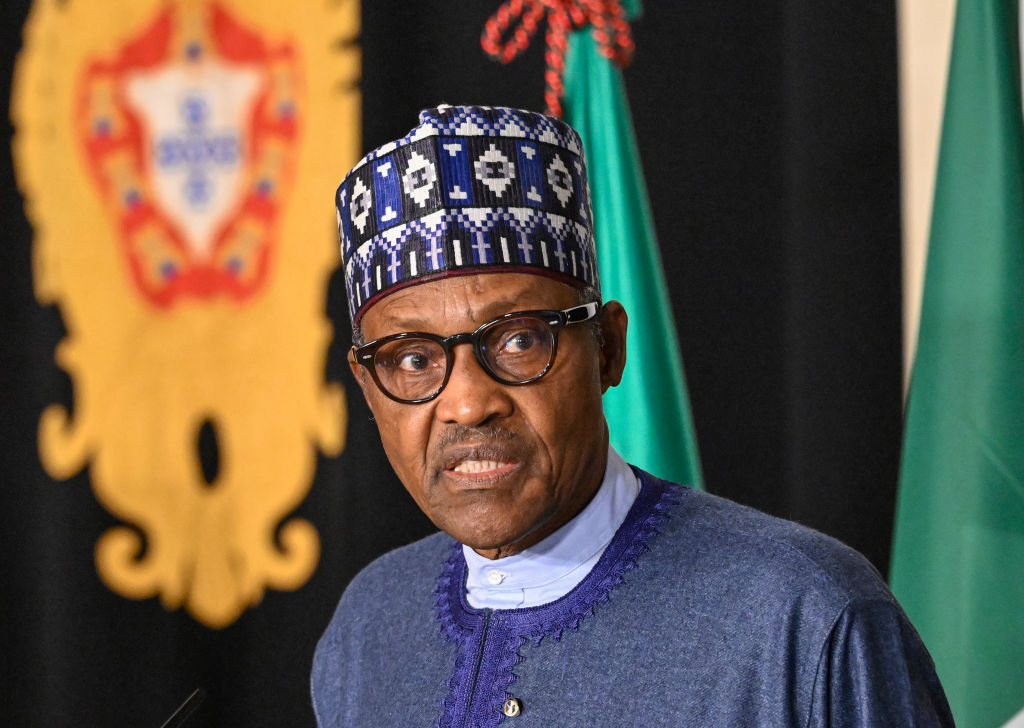
Muhammadu Buhari delivers remarks to journalists in Belem Presidential Palace in Lisbon, Portugal on June 30, 2022. (Horacio Villalobos / Corbis via Getty Images)
In the wake of the hard-fought and widely unpopular presidential victory of the All Progressives Congress (APC) in Nigeria’s 2023 presidential election, it is easily forgotten that the ruling party’s initial triumph in 2015 seemed to represent the flowering of popular aspiration.
Bearing “change” as its campaign slogan, the party came to power in the first victory by an opposition party, with its presidential candidate Muhammadu Buhari defeating Goodluck Jonathan of the incumbent Peoples Democratic Party (PDP), which had held power since Nigeria’s return to democracy in 1999.
But the APC seemed to represent change in more fundamental ways. The party’s rise was propelled by popular protest against austerity policies, chief of which was the PDP’s attempt to remove Nigeria’s fuel subsidy. Having overseen a period of commercial expansion, GDP growth, and intensified privatization of state-owned enterprises, the PDP, it appeared, had overplayed its hand in attempting to remove Nigeria’s “meagre but essential form of social welfare, derived from the country’s vast petroleum resources.”