Cyprus’s Polarized Elections Highlight a Crisis of Political Legitimacy
Sunday’s Cypriot election brought victory for nationalist hardliner Nikos Christodoulides. The Left’s vote held up, but the campaign also showed its weaknesses in combining class politics with answers to the country’s enduring division.
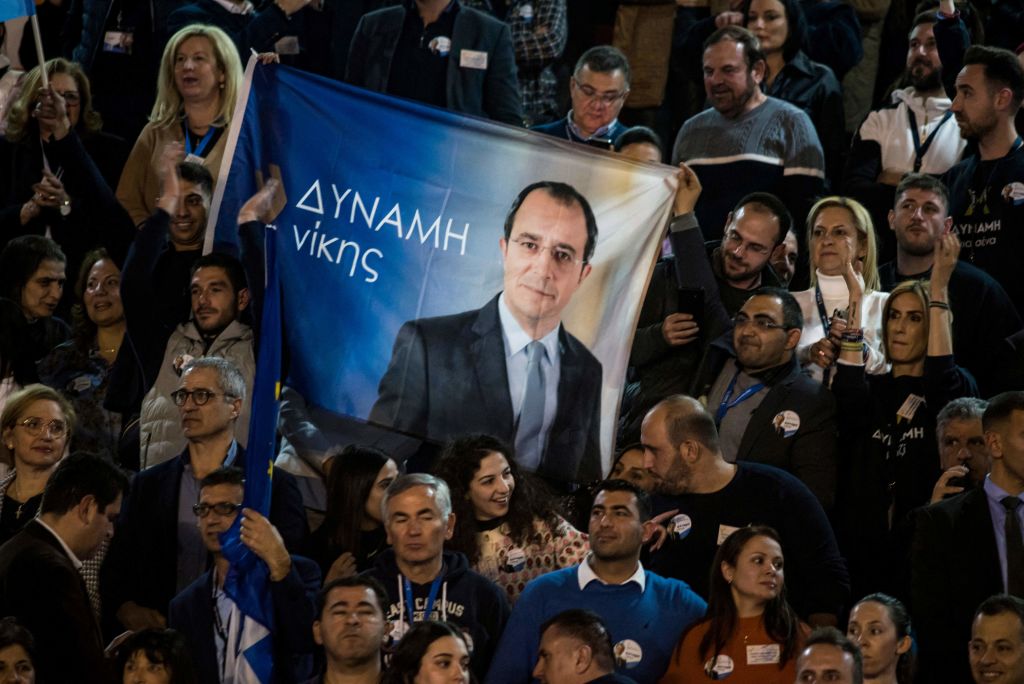
Supporters of Cyprus’s new president-elect Nikos Christodoulides await his speech with a banner showing his image during a proclamation ceremony at Eleftheria Stadium in the capital Nicosia late on February 12, 2023. (Iakovos Hatzistavrou / AFP via Getty Images)
It was probably the most polarized presidential election in Cyprus’s recent history. In the February 12 runoff vote, former foreign minister Nikos Christodoulides, a nationalist hard-liner, edged out the leftist-backed Andreas Mavroyiannis by a narrow two-point margin.
For the Progressive Party of the Working People (AKEL), Cyprus’s communist main opposition party, this marks the third failure in a row to oust the Right from power. AKEL had nominated Mavroyiannis, a liberal technocrat, on a program to restart stalled negotiations with the Turkish Cypriot community to reunify the island.
Cyprus has been ethnically divided since 1974. Following a far-right coup backed by the Greek junta against an elected president, Archbishop Makarios III, Turkey invaded under the pretext of protecting the island’s Turkish Cypriot minority. While the Greek Cypriot–controlled Republic of Cyprus joined the European Union in 2004, the northern part forms the internationally unrecognized Turkish Republic of Northern Cyprus.