In Cyprus, the Golden Passports Scheme Shows Us How Capitalism and Corruption Go Hand in Hand
Al Jazeera’s Cyprus Papers have exposed a corrupt trade that sells citizenship on the Mediterranean island. But Cyprus is no rogue state: its “golden passport” scheme is firmly rooted in the logic of global capitalism, which makes everything — including citizenship — a commodity.
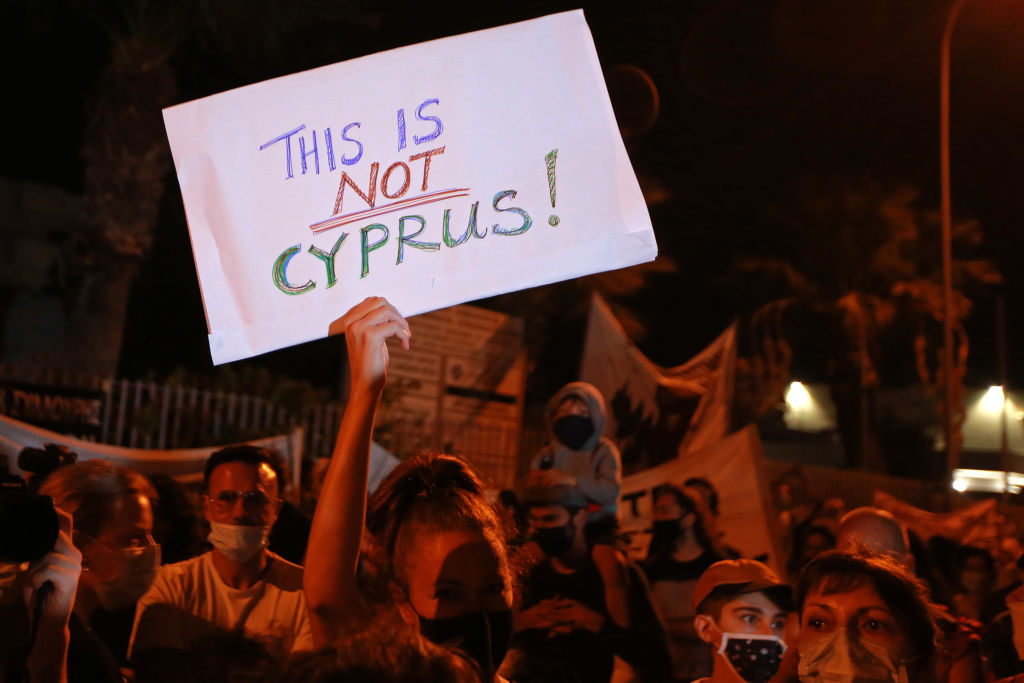
A protester holds a placard during an anti-corruption demonstration on October 14, 2020 in Nicosia, Cyprus. (Alexis Mitas / Getty Images)
In April 2019, a Cypriot taxi driver picked up a wealthy Moscow-based couple from Larnaca airport, where they had landed with their Learjet. He brought them to the naturalization department of Nicosia’s Immigration Office, and then back to their jet for a return flight to Moscow. Their whole sojourn in Cyprus had lasted five hours — all the time needed for the process of acquiring two “golden passports” to be put on track.
The following year, Al Jazeera published leaked documents, dubbed the “Cyprus Papers,” revealing that around 2,500 investors, some of whom were convicted criminals, had received citizenship through the island’s notorious “golden passport” program. The program, which had been significantly expanded in 2013, conferred Cypriot (and thus EU) citizenship on those willing to invest €2.5 million by acquiring real estate on the island.
State of Denial
The government of Nicos Anastasiades — whose law firm processes “golden passport” applications, and whose son-in-law is a major property developer — was quick to denounce the story, claiming that Al Jazeera was acting as a propaganda tool of its owner, Qatar, a close ally of Turkey. Cypriot government officials vowed to track down the whistleblowers who had provided the documents to Al Jazeera, instead of investigating the revelations. Accusations of treachery came with cosmetic assurances that the authorities would tighten up the screening process.