Business as Usual in Nicosia?
Election results in Cyprus suggest an endorsement of austerity. But the reality is more complex.
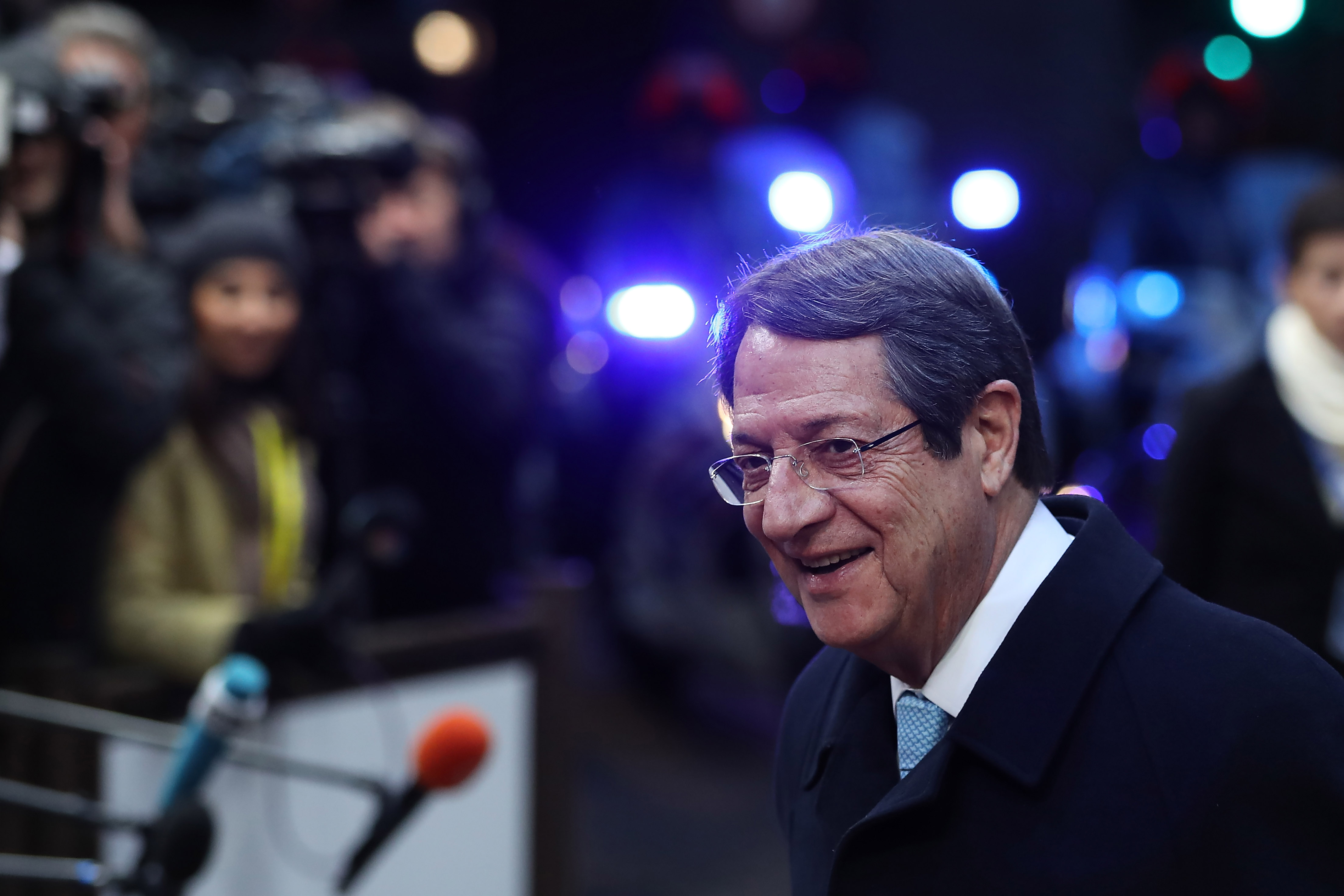
Cyprus’ President Nicos Anastasiades arrives for the second day of the European Union leaders summit at the European Council on December 15, 2017 in Brussels, Belgium.Dan Kitwood / Getty
Almost five years ago, Greek Cypriot president Nicos Anastasiades negotiated a “bail-in” to resolve the nation’s lingering banking crisis. The original deal required ordinary citizens to give up a percentage of their savings to cover the damages caused by the banks’ overextension in debt-ridden Greece. Overnight, ATMs were shut down, causing widespread panic.
The measure provoked an outburst of rage, and protesters laid siege to parliament in the capital, Nicosia. Confronted with the anger, the Anastasiades government softened the measure. Only bank accounts with over €100,000 would be affected by a “haircut” that would levy a set percentage tax on their accounts. Nevertheless, the results were catastrophic: businesses closed, and unemployment soared.
Anastasiades claimed the European Union forced him to accept the measure. But EU officials denied this, stating, quite credibly, that Anastasiades himself proposed the deal. Moreover, it is common knowledge in Cyprus that the corruption-plagued Anastasiades and his entourage had started transferring their money abroad in anticipation of the bail-in.