Tech Giants Are Building a Dystopia of Desperate Workers and Social Isolation
Tech companies like Amazon and Uber are creating a society divided between the served and their servants, where the “friction” of in-person interaction is eliminated. That friction is the stuff of social connection — a world without it is nightmarish.
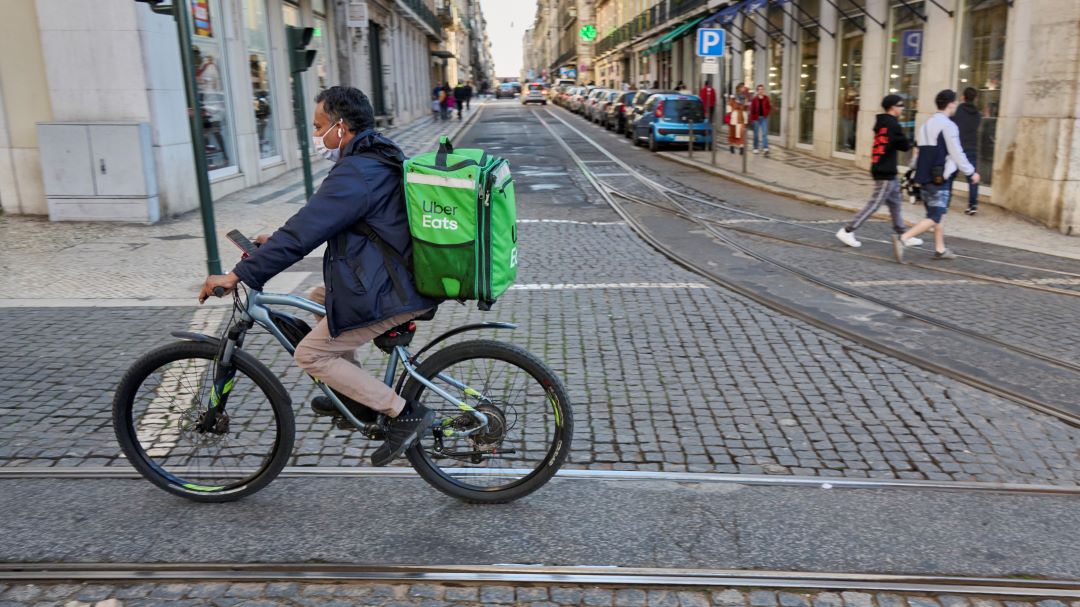
A mask-clad Uber Eats delivery driver rides a bicycle on January 22, 2022 in Lisbon, Portugal. (Horacio Villalobos / Corbis via Getty Images)
Five years before COVID-19 lockdowns forced people to stay home as much as possible, journalist Lauren Smiley was already writing about how a new wave of companies was creating a “shut-in economy.” These shut-ins weren’t people involuntarily stuck inside or shielding themselves from an unprecedented health crisis; they were tech workers who spent so much time working that they felt they had little time for anything else.
Instead of cutting back and finding a healthier work-life balance, they started using on-demand services for just about everything. They had their meals delivered so they didn’t have to cook for themselves. They got people to go pick up their groceries and sometimes even stock the cupboard. They relied on Amazon and a selection of apps, instead of running out to do errands or pick up their necessities.
Most of these on-demand services were made by people in the tech industry to serve the needs of other people like themselves while taking advantage of an increasingly precarious workforce. But the venture capitalists funding them would never be content just serving that niche market: the companies had to strive for monopoly, and that meant reaching a much wider market.