We’re Still Living Under Capitalism, Not “Techno-Feudalism”
Yanis Varoufakis’s Technofeudalism offers sharp insights into the rise of "cloud capital," but misreads it as inaugurating an entirely new economic system. The enemy is still capitalism, even if in a novel form.
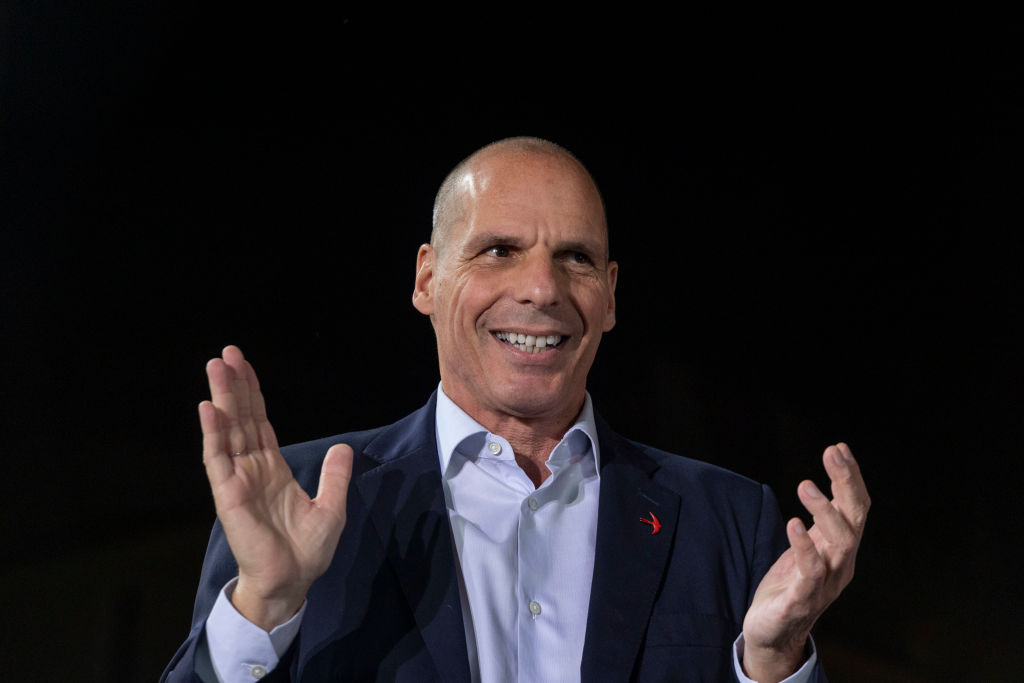
Yanis Varoufakis speaking in Athens, Greece on May 19, 2023. (Nicolas Economou / NurPhoto via Getty Images)
Former Greek finance minister Yanis Varoufakis has an appeal rather like time travel stories do. They allow us to imagine not just changing the past, but rejecting the weight of history altogether. In stopping Skynet, or kidnapping baby Hitler, the time traveler faces up to the structural political and economic forces that define their own present and says no. We cheer as the impersonal tides of history are pushed back by the contingent intention of human beings.
This was what many on the Left hoped for in 2015, when Varoufakis and a majority of Greeks said no to the austerity demands of their European creditors. Unfortunately, history has teeth: Syriza approved a bailout package even worse than the one that the Greeks had rejected by referendum, and Varoufakis resigned in dismay. He has since continued to struggle against oligarchy as a politician and writer.
Varoufakis’s latest book, Technofeudalism: What Killed Capitalism, argues that the present is a kind of return to the past. In his view, rent-focused “cloud capital” has displaced earthly capital, thanks in particular to a combination of internet privatization and post-2008 monetary policy. The result is the titular “techno-feudalism,” in which “cloudalists” extract value through their platform fiefdoms and data weaponry. In contrast to capitalism, techno-feudalism substitutes rents for profits and monopoly power for market competition.