Protesters in Peru Are Demanding Change
Peru is now in its third week of protests, triggered by the impeachment of former president Pedro Castillo. The country’s rural poor are decrying his removal and calling for new elections and a constitutional assembly.
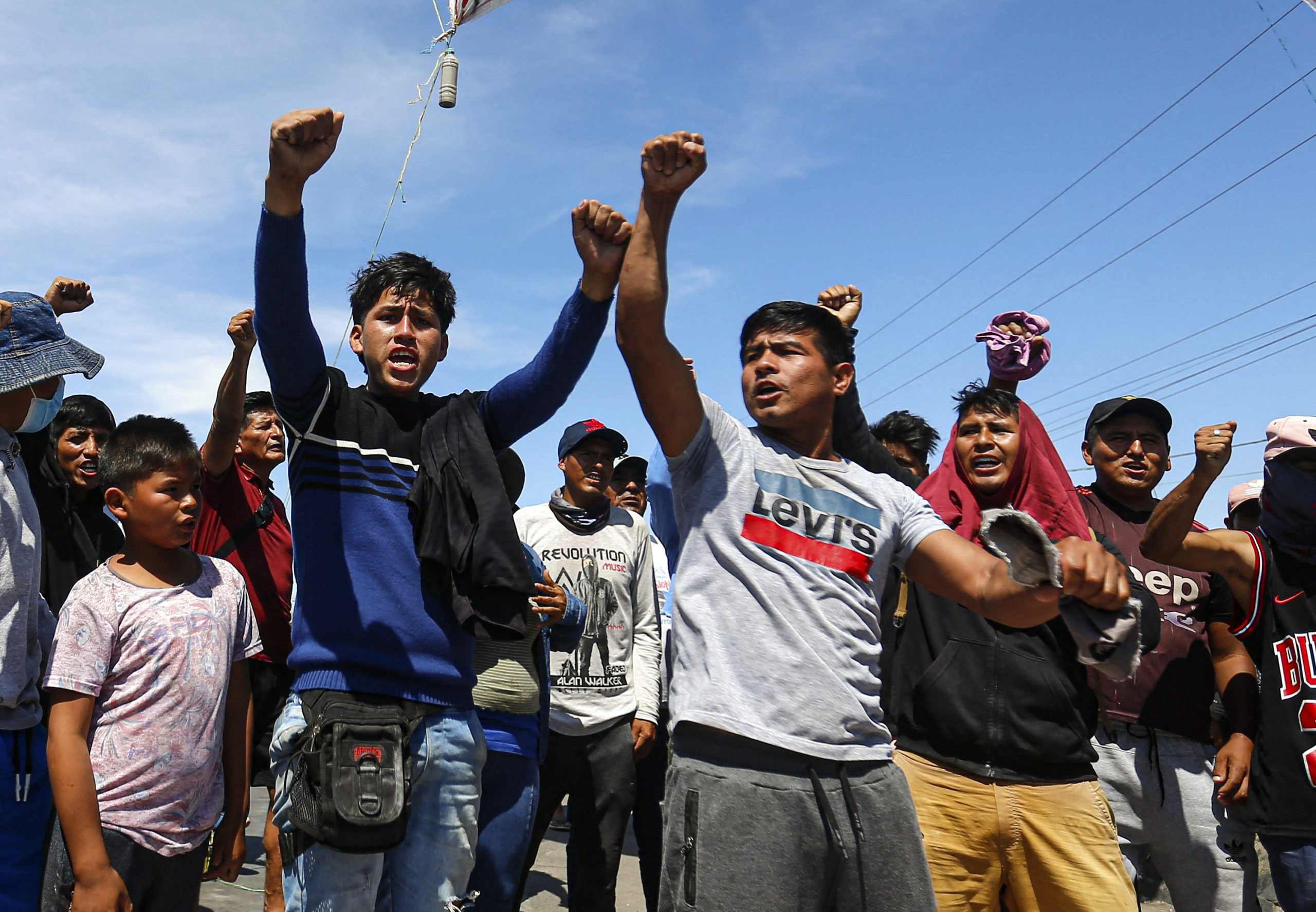
Demonstrators block the Pan-American highway demanding the resignation of the current president of Peru, Dina Boluarte, in Ica on January 6, 2023. (Hugo Curotto / AFP via Getty Images)
On December 7, Pedro Castillo was removed from the highest office in Peru, bringing to an end a sixteen-month term marred by clumsy administration, sectarianism, and the unrelenting attacks of a hostile, conservative-led Congress scandalized by the very idea of a trade unionist of indigenous background occupying the Government Palace.
For most, Castillo’s downfall came as little surprise, especially given his December 7 impeachment was the third such attempt by the Peruvian right in little over a year. Perhaps the only shock was Castillo’s own desperation and lack of calculation, calling for the closure of Congress as a means to avoid impeachment but inadvertently triggering the needed constitutional pretext for his very impeachment (officially, to prevent what was interpreted as Castillo’s “auto-coup”).
Less expected, however, was the outpouring of indignation across Peru in the days and weeks following Castillo’s removal. On one level, nationwide street protests were understandable: the ongoing legitimacy crisis in Peru, responsible, among other things, for bringing an unknown rural schoolteacher to power, has only grown more severe under Castillo’s watch. Right-wing conspiracy and left-wing infighting under his term further stoked popular disenchantment with the Peruvian political class, which already ranked among the most unpopular in the Western Hemisphere. That Castillo’s replacement, the unelected, some would add illegitimate government of Dina Boluarte, intended to serve out the remainder of a five-year term, was a bridge too far.