Peru’s Pedro Castillo Can Break With Neoliberalism for Good
Pedro Castillo is the next president of Peru. His election was a repudiation of neoliberalism and right-wing authoritarianism — and it could signal a permanent sea change in Peruvian politics.
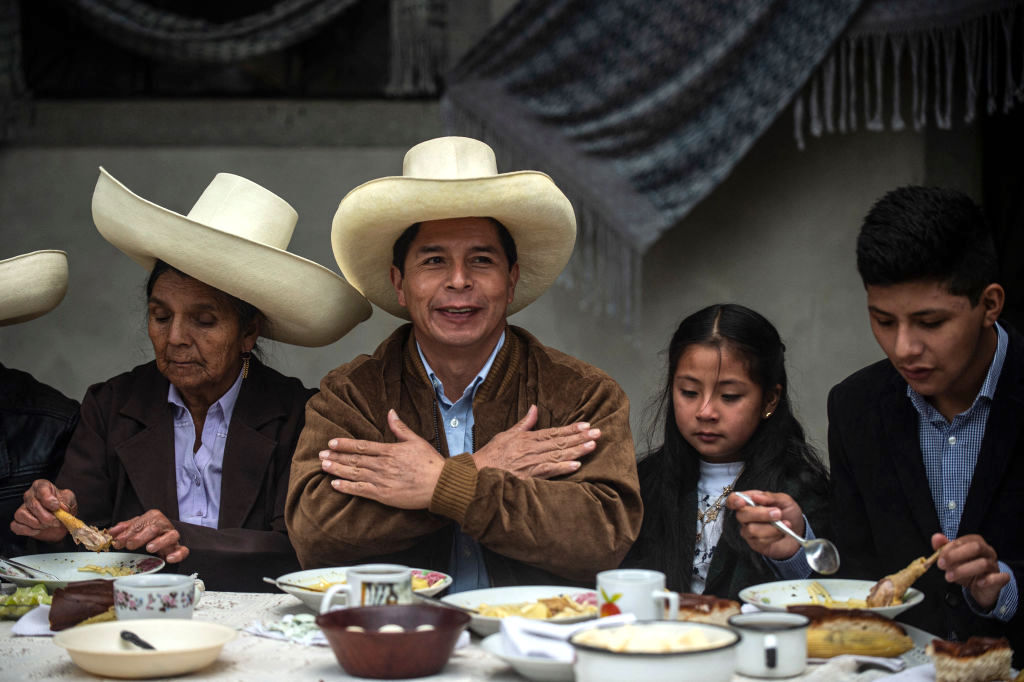
Peruvian left-wing president-elect Pedro Castillo accompanied by his family at his house in Cajamarca, 2021. (Ernesto Benavides / AFP via Getty Images)
Left-wing trade unionist Pedro Castillo is the president-elect of Peru. Unfortunately, that remarkable headline has been buried in an avalanche of less optimistic news: Keiko Fujimori and the Peruvian right have alleged fraud and gone on the assault, attempting to override the results of June 6’s presidential contest and, when all else fails, drag Peruvian democracy through the mud and delegitimize an election hailed by international observers as clean and fair.
Winning with the narrowest of margins, Castillo’s victory is far from consolidated, and the weeks and months to come will be crucial. On the one hand having to answer coup attempts from the Right, he will also need to bring on board a deeply divided electorate whose support he will rely on for the inevitable confrontation with Peru’s hostile political class and state structures.
Jacobin contributing editor Nicolas Allen spoke to Ben Burgis on the Give Them an Argument podcast about the Peruvian right’s last-ditch attempt to overturn election results, the threat posed by Castillo to the ruling elite, and why, even with a divided electorate, Castillo’s victory might mark the beginning of a sea change in Peruvian politics.