The Fight to Transform Peru Has Only Just Begun
A month since teacher and labor activist Pedro Castillo was elected Peruvian president, his far-right opponents are still trying to stop him from taking office. The attempt to overturn the election shows the elites' refusal to accept defeat — and the dangers the Left faces as it seeks a break from the country's neoliberal model.
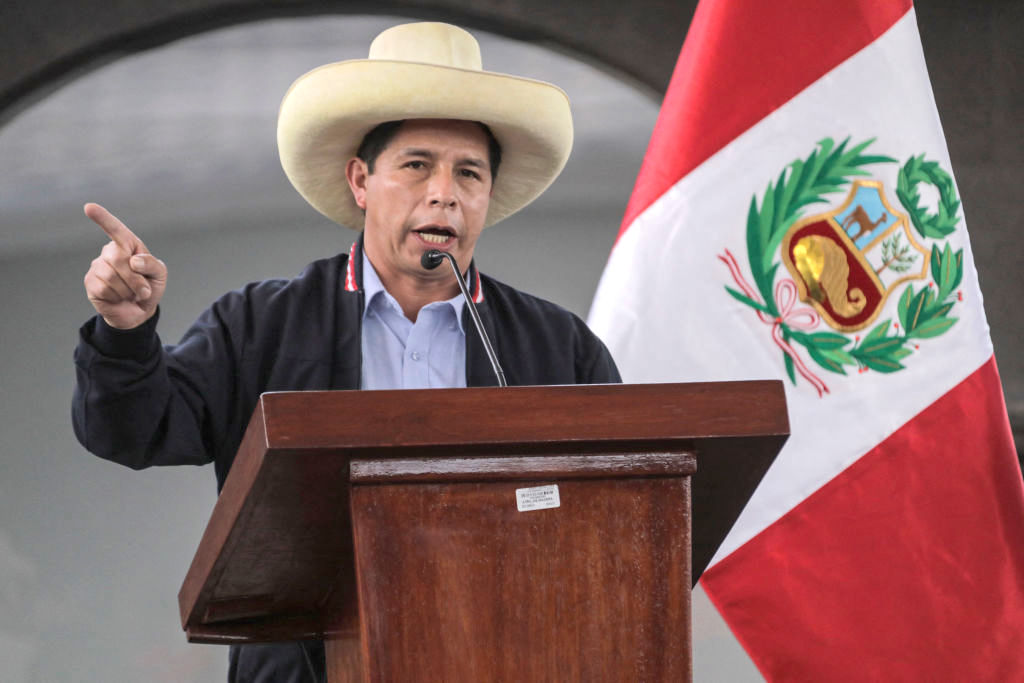
Peru’s president-elect Pedro Castillo of the Peru Libre party, 2021. (Jose Carlos Angulo / AFP via Getty Images)
The Peruvian election last month was closely fought — but the outcome decisive. Final results saw Pedro Castillo, a Catholic, rural teacher from Cajamarca in Peru’s far north, edge out his far-right opponent Keiko Fujimori by barely forty-two thousand votes. Yet the losing candidate, the daughter of ex-dictator Alberto Fujimori, has cried fraud — and launched a legal battle to overturn the result.
Indeed, Fujimori’s side of the political spectrum isn’t used to accepting such defeats. This is, after all, a country that has traditionally been made into part of the United States’ “backyard.” No progressive, left-wing or a left-nationalist government has been in power since the military regime of General Juan Velasco Alvarado in the late 1960s and ’70s. The June 6 result heralded a dramatic shift away from this conservative tradition.
The presidents of Argentina, Bolivia, Nicaragua, and Venezuela have all congratulated Castillo as the president-elect. But even weeks after the vote, the Fujimori camp appears to be determined to seize power, perhaps through a process like the November 2019 coup against Evo Morales in Bolivia.