Mick Lynch: The UK’s Proposed Anti-Union Laws Are “a Suppression of Our Human Rights”
In the wake of strike activity in Britain not seen since the 1980s, the government is proposing draconian laws further restricting workers’ right to strike. RMT leader Mick Lynch says the laws are a threat not just to unions but to democracy in general.
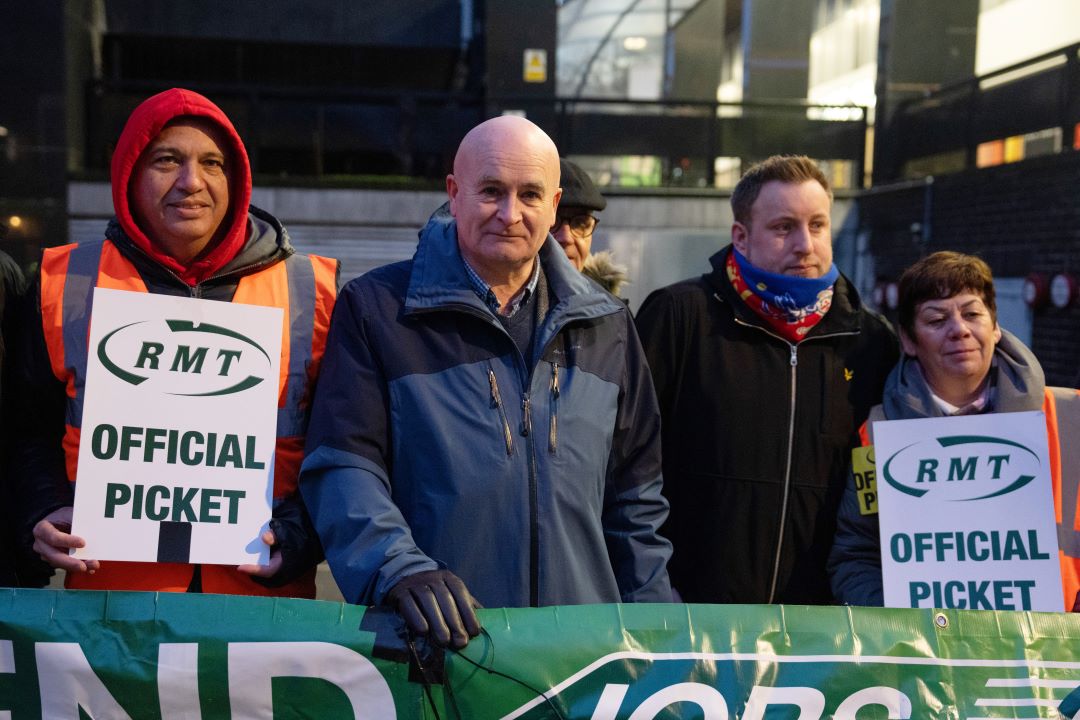
Mick Lynch (second from left), general secretary of the Rail, Maritime and Transport Workers Union (RMT), stands on a picket line with union members outside Euston Station on January 3, 2023, in London, England. (Carl Court / Getty Images)
The year 2022 saw the greatest number of strike days in Britain since the early 1980s. This wave of resistance has inspired millions — but it has also led to a fierce backlash from the government. In addition to another round of austerity, their response now involves a new round of anti-union laws designed to impede the growing movement and prevent workers looking to industrial action as a solution to the cost-of-living crisis.
The proposed laws are draconian. Under the legislation, trade unions would have to ensure that a predefined “minimum service” was maintained throughout any strike, seriously limiting the impact of industrial action. In addition, it is proposed that named workers will be required to work by companies regardless of whether they wanted to strike or not. And, if trade unions do not encourage these workers to cross their own pickets during strikes, the unions could find themselves liable for all losses suffered by companies in the course of these actions.
In response to this historic threat to the trade union movement, Enough Is Enough has launched a “Defend the Right to Strike” campaign. Its aim is simple: to build the broadest possible coalition against the legislation and prevent its implementation by the Tory government. This will take the form of protests, rallies, pledges for the public, politicians, and businesses, and a mass strike solidarity movement that will ensure workers are not isolated when fighting for their rights.