The New US Military Budget Enriches Private Contractors at the Cost of Human Well-Being
Congress will soon vote on an $850 billion military budget that would lavish over $400 billion on private contractors. It would be a massive redistribution of wealth to for-profit hands — at the same time millions of workers are struggling to pay the bills.
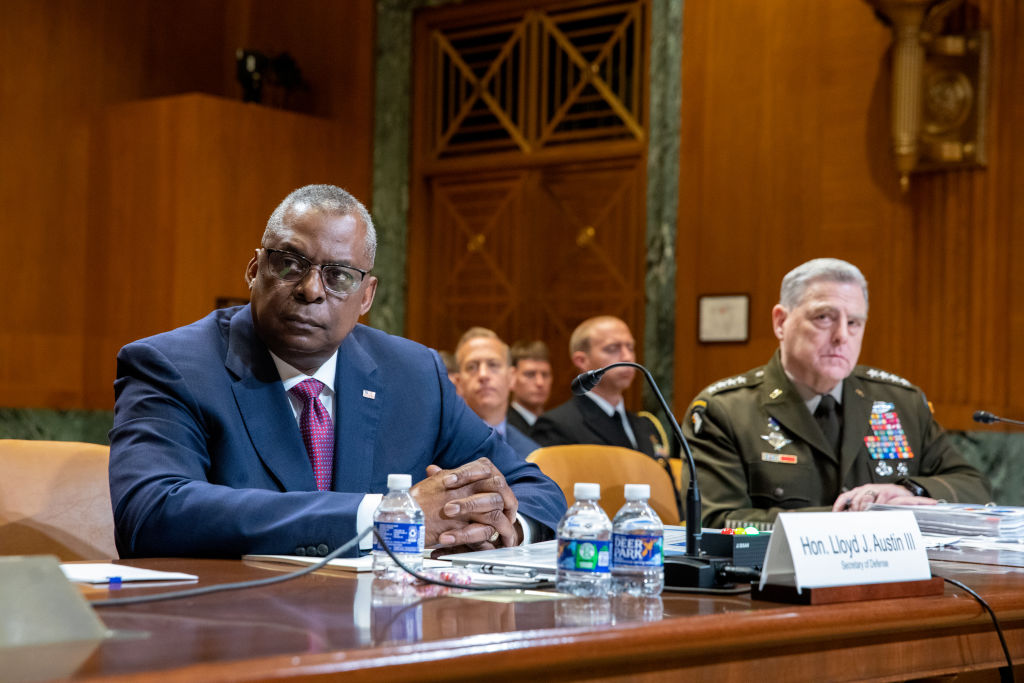
Lloyd Austin, US secretary of defense, left, and Mark Milley, chairman of the joint chiefs of staff, during a Senate Appropriations Subcommittee hearing on May 3, 2022, on President Biden’s Fiscal Year 2023 funding request for the Department of Defense. (Amanda Andrade-Rhoades / The Washington Post / Bloomberg via Getty Images)
Earlier this year, Joe Biden described his military budget for Fiscal Year 2023 as “among the largest investments in our national security in history.” But what it will actually deliver is a historic redistribution of wealth to the business class: more than half of the annual US military budget goes to for-profit companies. So when the House and Senate vote later this month on the Fiscal Year 2023 National Defense Authorization Act — which contains $858 billion in military spending, thanks to an agreement reached this week — the two chambers will effectively be deciding whether to lavish well over $400 billion on private contractors.
The contrast with ordinary workers could hardly be starker. At the same time weapons companies propel Pentagon spending ever-higher — putting even Cold War–era military budgets to shame — millions of people in the United States are struggling with a cost-of-living crisis exacerbated by inflation. Nearly two-thirds of Americans are living paycheck to paycheck. A recent study by the Federal Reserve Bank of Dallas found that a majority of employed workers’ real wages haven’t kept up with inflation over the past year.
And how has the Biden administration responded? By dropping pandemic relief in a bid to curb rising prices. Ending pandemic aid has simply deepened economic precarity for millions of people. According to an October Census Bureau survey, 41 percent of US households say it’s very or somewhat difficult to pay their typical household expenses. That number was 26.2 percent in April 2021, right after the third round of stimulus payments.