The World Cup Should Make Us Rethink Our Understanding of Human Rights
Media coverage of the World Cup has rightly highlighted the atrocious working conditions of migrant workers. But we need to broaden our definition of human rights abuses to include the global economic system that forces them to go to Qatar in the first place.
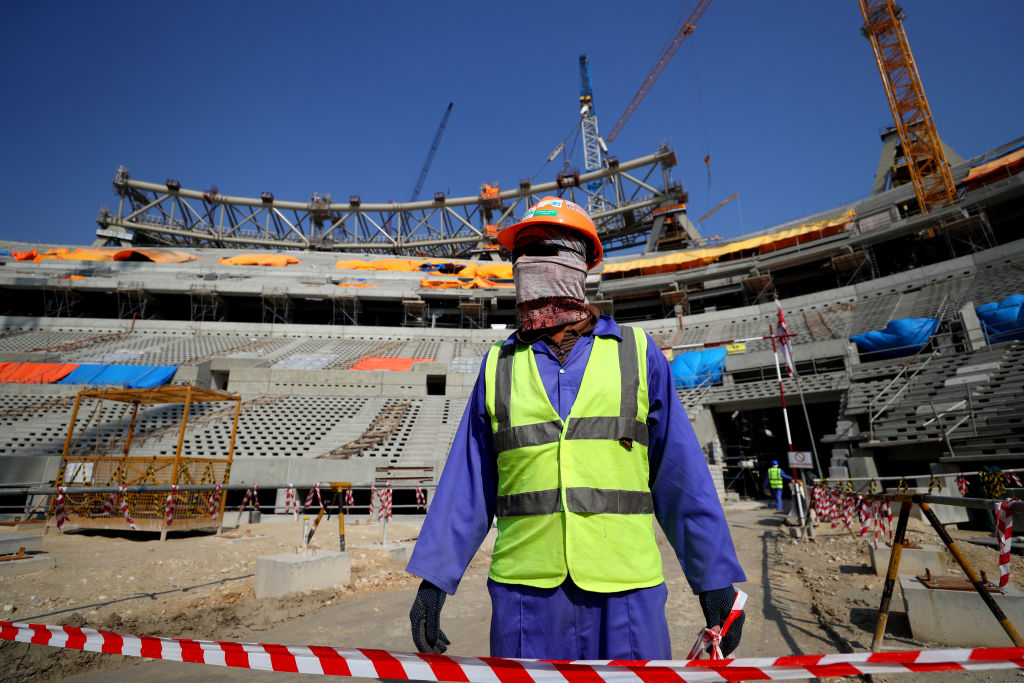
Construction work at Lusail Stadium in Doha, Qatar. (Francois Nel / Getty Images)
It pays not to think too much about the wider environment surrounding football today. Excess, greed, ferocious self-interest, and stark inequalities are its guiding principles. Repressive states intoxicated on the rewards of fossil capital now use the sport as a pawn in their geopolitical game, while players market useless and ethically corrupt NFTs to their millions of fans.
In the face of this depressing scene, it has been encouraging to see several football associations and many international players take a stand on human rights in the lead-up to the World Cup in Qatar. Surely no spectator can watch this World Cup without knowing about the desperate plight of migrant workers, the repression of women in everyday life, the crackdowns on press freedom, and the punishment of LGBTQ people.
Whether spectators care or not is a different question, of course. But the signs are that most football fans would prefer that the World Cup was not taking place in a country with such a terrible human rights record.