The Chinese Revolution at Seventy
The Chinese revolution turned seventy this week. If you were looking for reflection on the meaning of that revolution today, you wouldn't find it in mainstream media coverage.
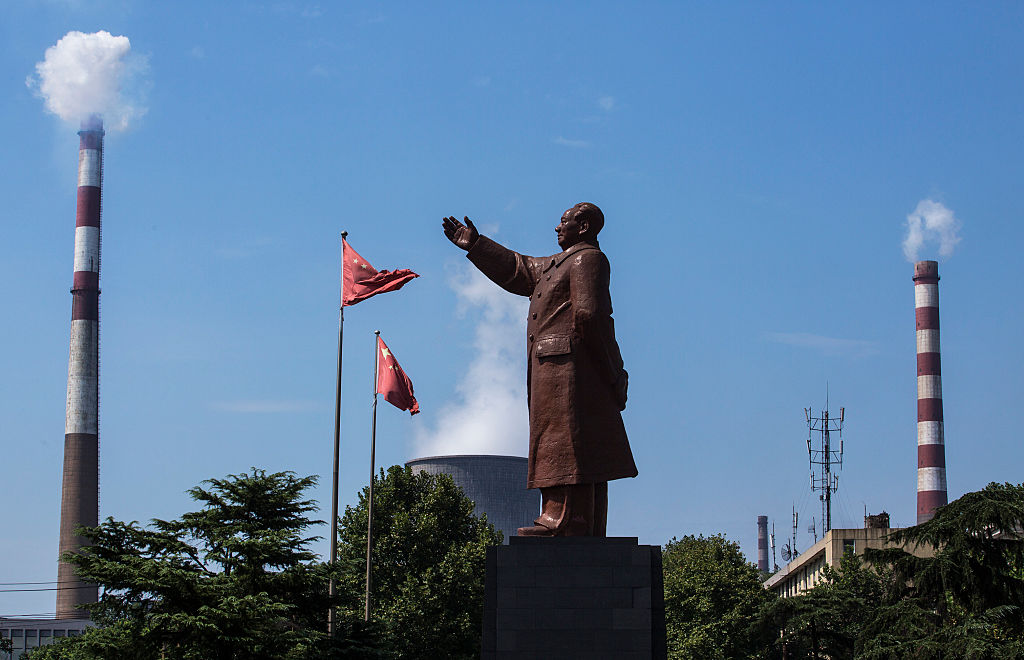
A statue of former Chinese leader Mao Zedong in Wuhan, China. Wang He / Getty Images
The Chinese government put on a spectacular October 1 event in Beijing to mark the seventieth anniversary of the 1949 revolution. Mainstream media focused on the dangerous armaments that were paraded along Chang’an Avenue, a main Beijing thoroughfare, and how President Xi Jinping is a terrible dictator of an autocratic regime. No opportunity to stoke fear among those in the “free world” went untaken.
What we did not read, unfortunately, was anything that actually explained what the Chinese revolution represented and its historical significance. The nature of today’s China is rooted in the revolution of seventy years ago.
On the afternoon of October 1, 1949, Mao Zedong, a key leader of the revolution, stood atop Tiananmen, gateway into the Forbidden City, and declared the founding of the People’s Republic of China. He listed himself and fifty-seven other men as having been elected by the Chinese People’s Political Consultative Conference to run the country, and outlined their various responsibilities. He concluded by stating their intent to establish diplomatic relationships with any other governments.