The Philosopher Who Helped Kill the King
The 17th-century philosopher Lucy Hutchinson was among the regicides who sent Charles I to his execution, ushering in an English republic in 1649. The divine right of kings, Hutchinson knew, could indeed be ended.
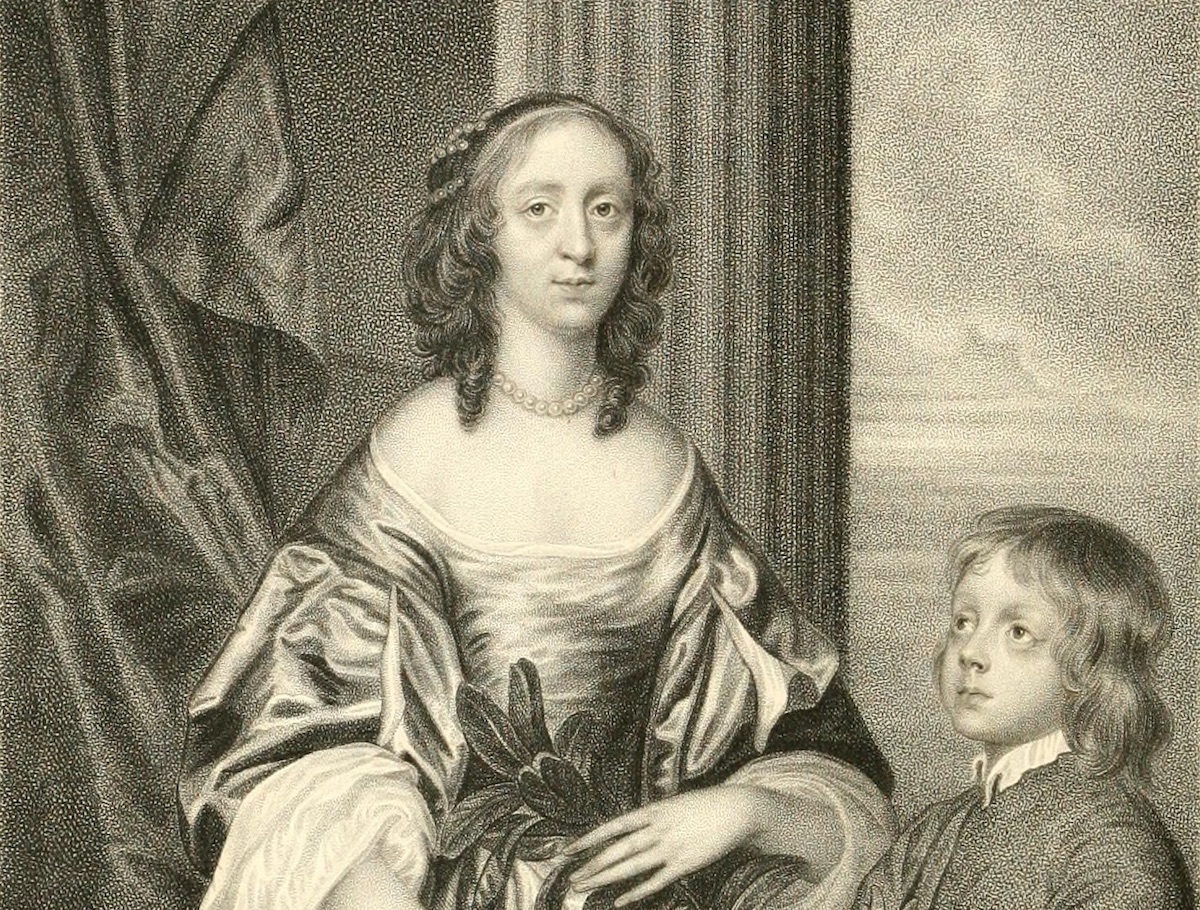
Lucy Hutchinson’s works shed blazing light on the only successful revolution in British history. (Wikimedia Commons)
In 1640s England, a civil war broke out between Parliament and the king. Years of brutal fighting culminated in the victory of the Parliamentarians, the execution of King Charles I in 1649, and a decade-long republican experiment. The men who signed Charles’s death warrant came to be known as “regicides.”
Most of these king killers’ names have been forgotten — but not Colonel John Hutchinson’s. This is in no small part due to his much more interesting wife. Lucy Hutchinson was born in 1620 to a family of landowning merchants. Her family had done exceedingly well from the late feudal order in England — among other prestigious titles, her father was lieutenant of the Tower of London. Lucy became an ambitious gentry intellectual and married John in 1638. She politically dominated the marriage and circumvented social restrictions on women’s participation in public life by acting under his name and through anonymous publication.
The outbreak of civil war saw Lucy spurn her family’s Royalist credentials and commit the couple to the parliamentary cause against the monarchy. In 1643, Parliament rewarded the Hutchinsons by making John governor of the politically divided Nottingham — where Charles I had symbolically launched the conflict one year earlier.