Britain’s Security State’s Long History of Spying on Left-Wing Intellectuals
Britain’s police and secret service has spied on and infiltrated left-wing political organizations since the 19th century. A new book shows that their continued influence poses a serious threat to democracy.
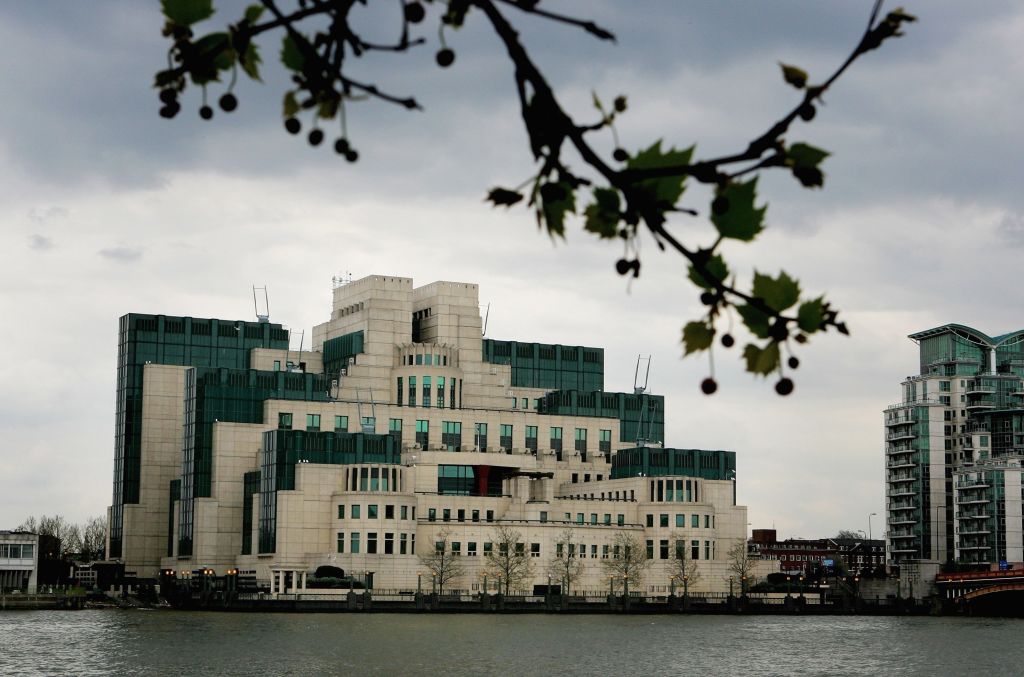
MI6 headquarters on the River Thames in London, England. (Daniel Berehulak / Getty Images)
There has scarcely been a protest movement in modern British history in which the country’s security state has not sought to intervene. The London Corresponding Society — early advocates for universal male suffrage under the tutelage of Thomas Payne — was extensively surveilled and subsequently outlawed in the late 1700s. The Luddites were also under the expedient eye of the state throughout the early nineteenth century. It was, however, only after the 1819 Peterloo massacre, where a combination of private militias and the army killed fourteen protesters, severely damaging the reputation of the military, that Britain’s modern security state emerged.
A decade after Peterloo, the Metropolitan Police was founded, followed around half a century later by Special Branch. The branch, which sat within the Met, was initially designed to combat Irish republicanism, but would go on to become a driving force behind political policing across the UK. In response to growing demands for independence in the colonies, MI5 and MI6 were established in 1909. The two were initially grouped together under the Secret Service Bureau before splitting during the First World War.
Today, unsurprisingly, much remains unknown about the full extent of MI5’s operations, both at home and abroad. David Caute’s Red List seeks to plug this lacuna of the role that Britain’s security apparatus has played. Based on National Archive releases, Caute has pieced together an extensive history of MI5 surveillance across the twentieth century. His research shows that its operations targeted, but were not limited to, left-wing academics, journalists and lawyers, the Communist Party of Great Britain, and a number of prominent left-wing cultural figures.