Eric Hobsbawm’s Success Was Because of His Marxism, Not in Spite of It
A new documentary on Eric Hobsbawm presents a sensitive portrait of a historian who achieved international acclaim despite his Communist politics. Yet Hobsbawm’s Marxism is fundamental to understanding his work, and why he undertook it in the first place.
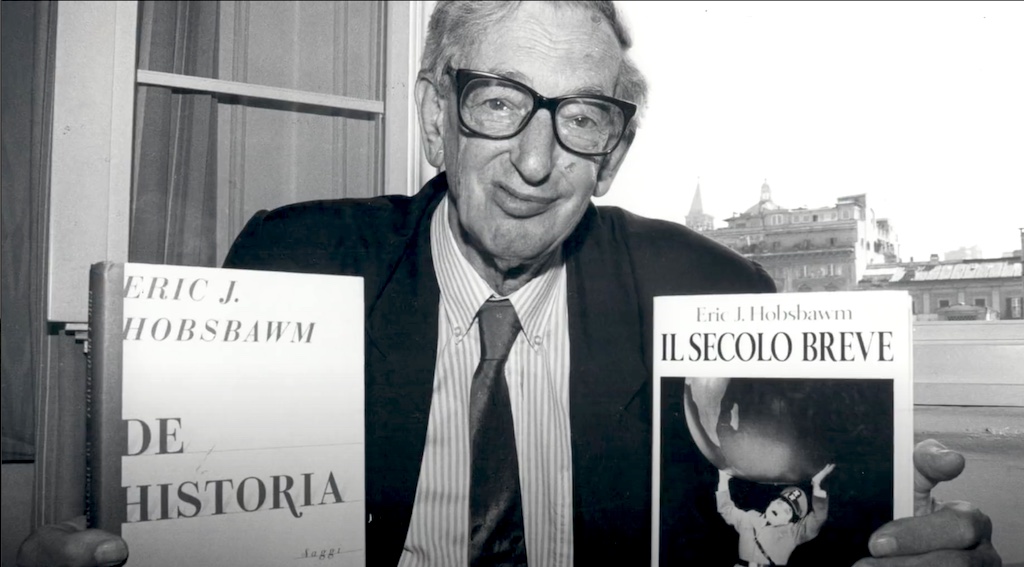
Eric Hobsbawm: The Consolations of History (London Review of Books)
Eric Hobsbawm was an unrepentant Communist for over three quarters of a century. One of the world’s most famous historians and an influential public intellectual, Hobsbawm possessed a range of qualities that British intellectuals have in general lacked. He became known for his polymath mastery of European and world history, multilingual range, theoretical sophistication, synthetic clarity, sense for empirical detail, and electrifying turns of phrase — and a moral commitment to those whom history unjustly ignored.
In mass-audience works like his Ages book series, Hobsbawm’s Marxism revealed itself subtly and without didacticism; the structure and logic of his argument showed his sympathies as much as the citations. He believed the Marxist tradition was founded on the search for truth. History mattered because it had a purpose: rational and objective inquiry into the past was a prerequisite for human progress. These qualities made him an unusual historian in the European left’s historic backwater. If Britain has long been known for its insensitivity to revolutionary ideas of both Left and Right, how can it have produced a historian of such epic global stature?
Hobsbawm’s individual biography provides one particular vantage point on this question. A new film on his life and work, produced for the London Review of Books (LRB) by its digital producer, Anthony Wilks, narrates and contextualizes Hobsbawm’s journey from the periphery to the center of British intellectual life. A lengthy, well-researched, and professional film, Eric Hobsbawm: The Consolations of History will likely become his audiovisual biography of reference for the foreseeable future.