The World Survived the Cold War Because It Feared Nuclear War
Many thought that, with the end of the Cold War, the world had seen the last of big-power nuclear brinksmanship. But the Ukraine crisis has revealed that leaders have forgotten the lessons of that era.
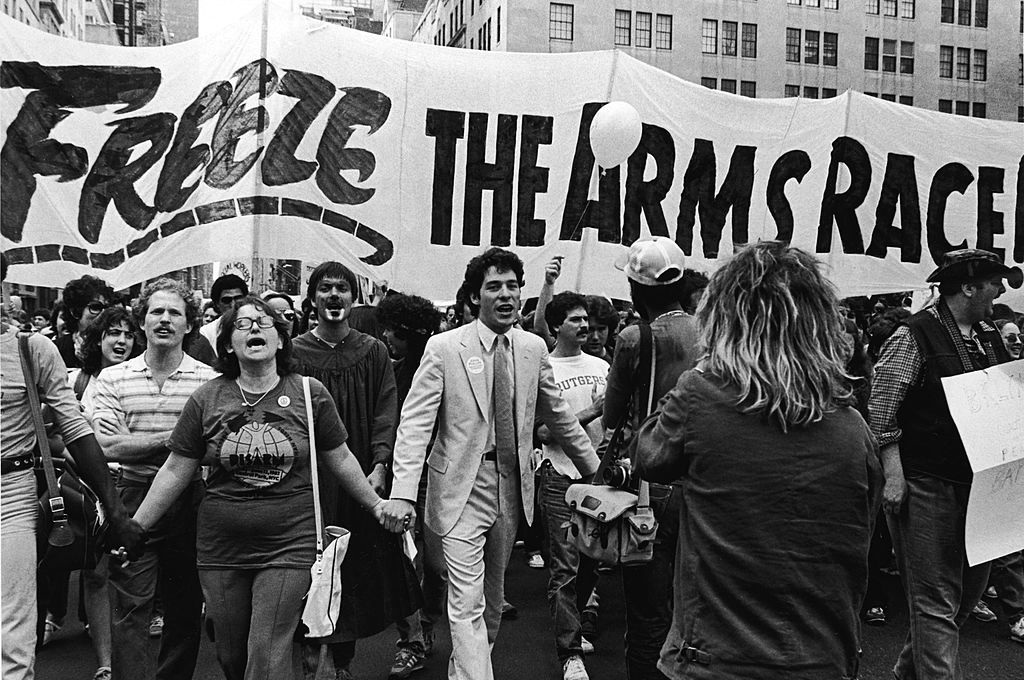
Demonstrators march toward Central Park during a massive nuclear disarmament rally where 750,000 gathered to demand a freeze on nuclear arms, New York, June 12, 1982. (Lee Frey / Authenticated News International / Getty Images)
The war in Ukraine increasingly poses dangers for the entire world. Vladimir Putin’s threats of nuclear blackmail last week were met by hawkish Western media commentators and NATO leaders who have been insisting that the pursuit of anything less than total victory in Ukraine would mean giving in to nuclear blackmail.
For insight on the logic of past nuclear confrontations and the lessons for Ukraine today, Jacobin’s Branko Marcetic spoke to George Beebe, a longtime US intelligence analyst, diplomat, and policy advisor on Russia who today serves as director of grand strategy for the Quincy Institute for Responsible Statecraft.
Beebe spoke about the growing danger that mistakes and miscalculations by leaders on either side could unleash an escalatory spiral, and explained how in the Cold War, each side routinely “gave in” to the other side’s “nuclear blackmail,” but in doing so actually helped establish important norms that prevented subsequent crises from going nuclear.