Africa Is Not Immune to the Rising Tide of Xenophobia
Xenophobic politics aren’t just on the rise in the West, but in African countries like South Africa. And the culprit is similar: a ruling elite that refuses to address rapacious economic inequality and instead fans the flame of anti-foreign resentment.
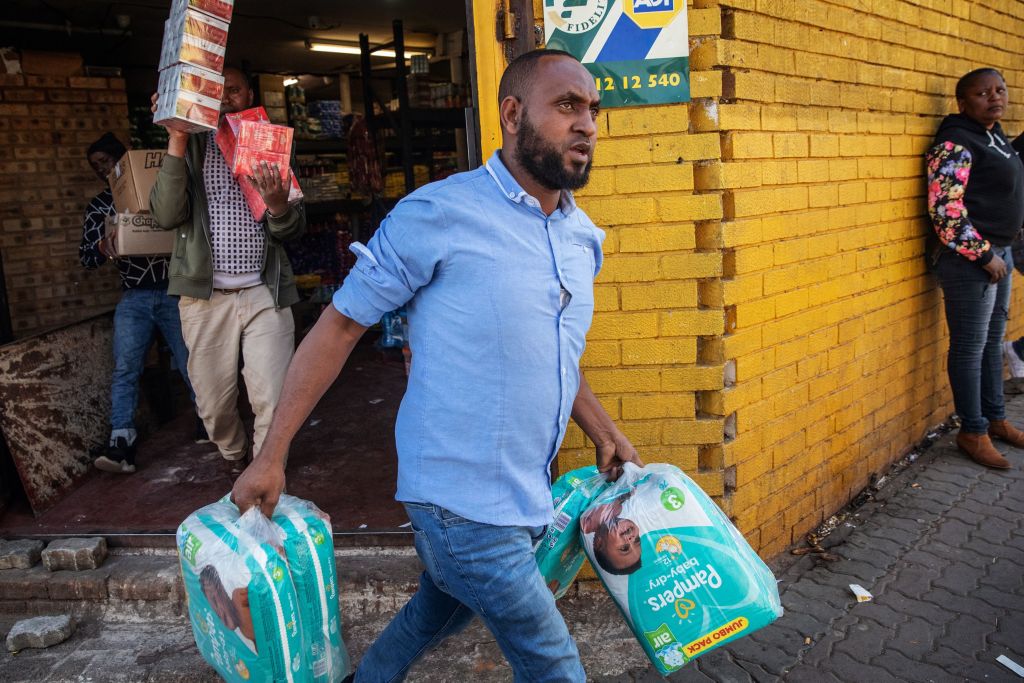
A foreign national moves goods from a looted shop in the Johannesburg township of Alexandra on September 3, 2019 after South Africa’s financial capital was hit by a new wave of anti-foreigner violence. (Michele Spatari / AFP via Getty Images)
In South Africa there seems to be a seasonal shift: discussions around Zimbabwe and Lesotho workers permits are being hosted by cabinet; laws and administration around visa renewals and working permits have been changed in the last few months; members of the governing party, the African National Congress, are asking for border reinforcement and openly associating foreigner activities in the country with insecurity as opposed to economic growth. Finally, news highlights in South Africa now include scenes of burnt shacks, palpable fear, and public protests as angry mobs frantically search for undocumented foreigners. To fully understand why South Africa and its democratic institutions are entering a nationalist winter, a snippet of African political history is helpful.
Naturally, xenophobia is not a new phenomenon for the rainbow nation; xenophobic violence dates back to 2008 and has already been largely commented on through an array of media platforms. However, what seems to be surfacing is a new form of institutionalized xenophobia rising from within the state. A few years ago, no political entrepreneurs had seriously taken ownership of the xenophobic agenda. The issue mainly emerged from an impoverished population that focused their efforts on looting local spaza shops typically owned by foreigners from other African countries, as opposed to retail giants owned by white South African capital (which was what happened during the July riots of 2021).
Elsewhere on the continent, other historical examples of such narrow nationalism abound. In 1989, in the middle of a long economic crisis and after many marches contesting his power, president Abdou Diouf of Senegal signed a decree to expel approximately 170,000 Mauritanians. At that point, the Parti Socialist Senegalais of Léopold Sédar Senghor had been in power since independence in 1960, and Diouf was Senghor’s successor. President Diouf did what many had done before him in response to an economic meltdown: blame the “aliens” and “foreigners” in a clumsy attempt to gain back political legitimacy without addressing the inequities of a rapacious neoliberal economic order.