How a Lethal Pandemic Brought Catastrophe and Class Conflict to the Byzantine Empire
Historians have underestimated the role of pandemics in changing the course of history. Long before the Black Death hit Europe, an outbreak of bubonic plague triggered a profound social crisis in sixth-century Byzantium, shaking the foundations of the empire.
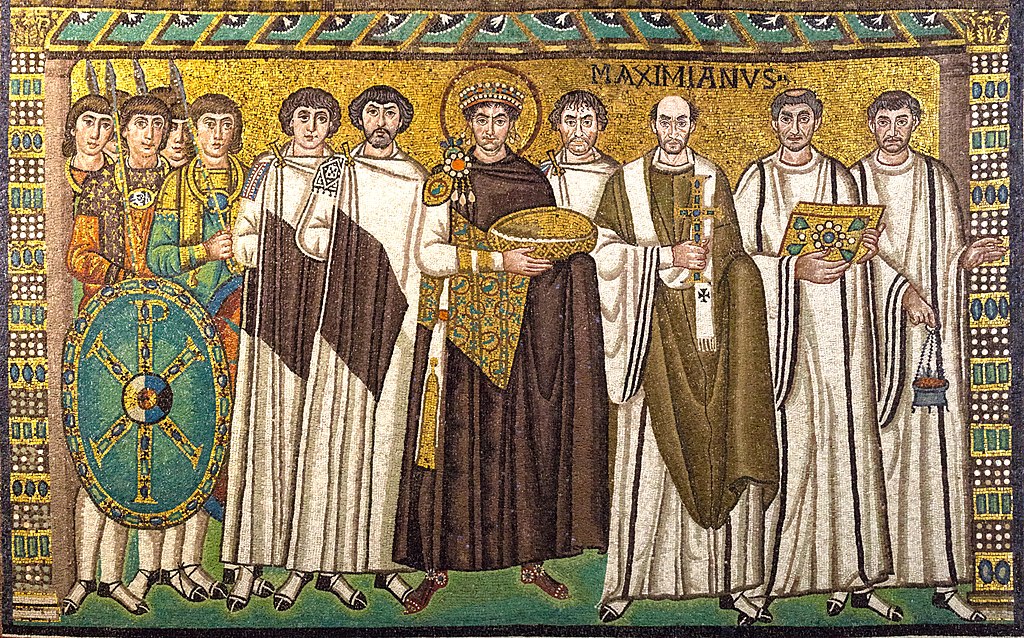
A mosaic of Byzantine emperor Justinian and his suite in Basilica San Vitale, Ravenna, Italy. (Roger Culos / Wikimedia Commons)
The COVID-19 pandemic has renewed interest in previous moments of world history when the catastrophic spread of disease had major social ramifications. The impact of the Black Death in Europe is perhaps the best-known example. After the plague had wiped out a large part of the continent’s population, the second half of the fourteenth century witnessed an upsurge of class conflict as the landowning elite tried to maintain its position in the face of labor shortages and popular revolts.
However, this was by no means the first time that a destructive pandemic disrupted the social order. During the sixth century CE, the East Roman or Byzantine Empire was ravaged by a much earlier wave of bubonic plague. A period of intense social and political turmoil followed this biological calamity in what was then by far the largest and most powerful state in the lands of modern-day Europe and the Middle East.
For good reason, the sixth-century period known as the “Age of Justinian” has recently been at the forefront of debates about the socioeconomic impact of disease and its function in processes of historical change. A closer look at this experience can help us to understand the role that pandemics and other calamitous events such as natural disasters and climate change have played in shaping the course of history.