Why Chileans Rejected the Proposed New Constitution
- Alex Caring-Lobel
Chile’s new constitution would’ve replaced its Pinochet-era charter with one that guarantees social, economic, and environmental rights for all. Why, then, did Chileans overwhelmingly reject it?
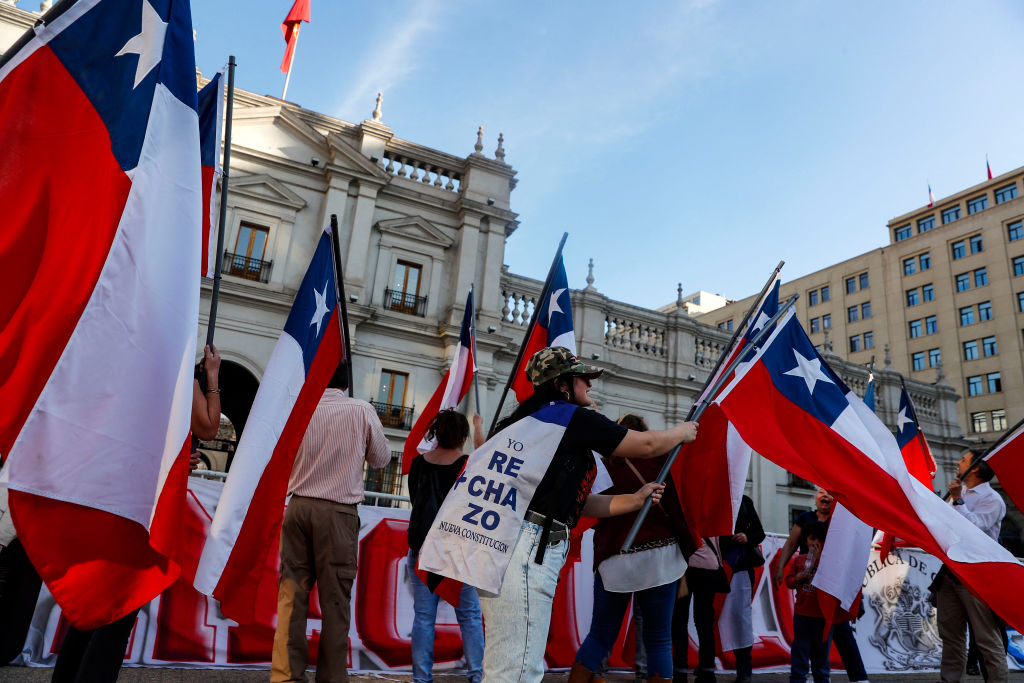
People who rejected the new constitution draft protest against the government of Gabriel Boric a day after the vote in front of La Moneda Palace in Santiago. (Javier Torres / AFP via Getty Images)
On Sunday, September 4, the command of the Movimientos Sociales por el Apruebo — militants and representatives supporting Apruebo, the “approval” of the new constitution — gathered at the headquarters of the Bata union in downtown Santiago, just steps from the iconic Plaza Dignidad (a crucial site during the October 2019 uprising). After 6 PM, results began to come in for the national referendum to approve or reject the new constitutional text, drafted over the course of a year by the Constitutional Convention, the body elected by universal vote in May 2021.
It quickly became understood that Rechazo (reject) would win, but no one had anticipated the overwhelmingness of the defeat. After months of mobilizations, one had to face and accept the victory of conservative forces against the proposed constitution, which sought nothing less than to end the 1980 constitution, written during the dictatorship of Augusto Pinochet.
An Overwhelming Defeat
The result was devastating: 61.88 percent Rechazo and 38.12 percent Apruebo, with the participation of more than 13 million voters (85.81 percent of the electoral register), or 4.5 million more than voted in the second round of presidential elections in December 2021, a surge in participation accounted for by the adoption of an obligatory voting system with automatic inscription.