Chile’s Constitutional Fiasco Holds Lessons for the Left
The election of the far right to Chile’s Constitutional Council is another major blow to the hope of a new constitution. But the Chilean left isn’t defeated yet.
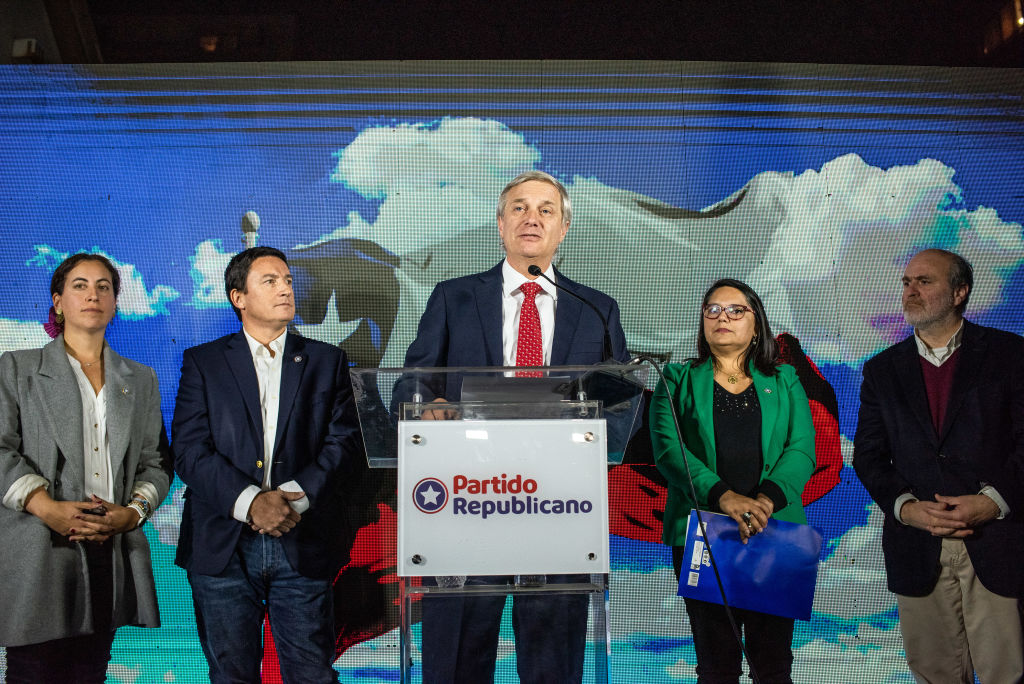
Jose Antonio Kast, founder of Partido Republicano, speaking at the party’s headquarters following the Constitutional Council elections in Santiago, Chile, on May 7, 2023. (Cristobal Olivares / Bloomberg via Getty Images
After riding high on a wave of optimism in 2021 and 2022, the fight for constitutional change in Chile has come crashing down in spectacular fashion. Propelled by the 2019 social uprising and galvanized by the electoral victory of Gabriel Boric, the dream of burying the Pinochet-era constitution has unexpectedly run aground and now faces an uncertain future.
The first announcement of a “Chilean Thermidor” came with the defeat of the September 2022 exit plebiscite. Many leftists had steeled themselves for a hard-fought campaign, knowing that it would be difficult to win public approval for such a radical constitutional proposal (with controversial measures such as indigenous autonomy and rights for the natural world coming under special scrutiny). Still, few could have foreseen such a calamitous result: the 62 percent rejection of the new constitution was a bellwether event, less a temporary setback than the first in a string of disorienting defeats.
The Boric administration tops the list of political casualties. Tying his own reform agenda to the passage of the new constitution, Boric’s most ambitious policy initiatives were effectively neutralized by the rejection vote. Through no fault of his own, Boric now risks going down in history as the leftist president who achieved less than his right-wing predecessor, Sebastián Piñera, to advance the cause of a new constitution.