Historian Paul Garon Documented the Beauty and Radicalism of the Blues
More so than any other genre, the blues addressed the misery of black American life under capitalism. The work of the late historian Paul Garon made an invaluable contribution to unearthing this tradition’s radical roots.
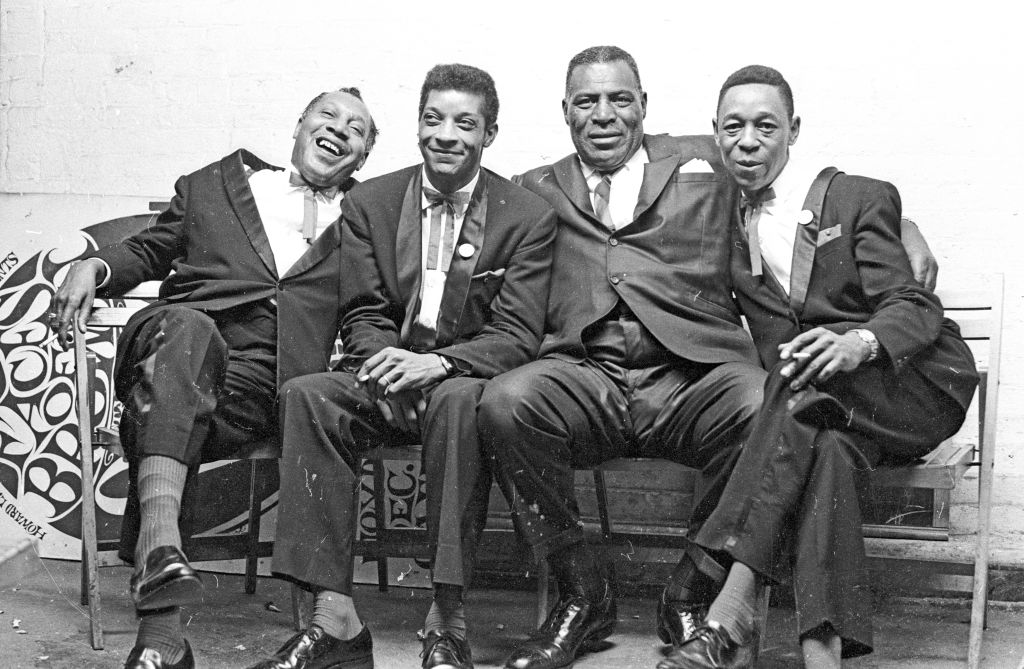
Chicago blues musician Howlin Wolf (second from right) with other blues musicians. (Michael Ochs Archives / Getty Images)
Paul Garon might have known more about books than anyone else in Chicago. A founding partner of the Chicago Rare Books Center and owner of Beasley Books, Garon, who died on July 25, 2022, collected and sold first-edition copies on labor history, surrealism, leftist politics, psychoanalysis, musicology, beat literature, and African American studies for decades.
He was an important figure in socialist publishing and the city’s counterculture scene, a longtime board member of Charles H. Kerr — America’s oldest radical publisher — who even compiled their back catalogue. His greatest love, however, was the blues. One of the genre’s most knowledgeable and ambitious experts, he saw in the blues the articulation of a specific subjectivity: that of the black working men and women of America, unsung revolutionaries who took up music as a valiant form of poetic protest. His four pioneering books and distinctive Kentucky drawl, punctuating the hum of Chicago bookstores and blues clubs, unveiled a radical history of this country.
Born in 1942 to a physician and sociology graduate, Garon was a Louisville native whose first encounter with blues music, at eighteen years old, stopped him in his tracks. Upon hearing Brownie McGhee and Sonny Terry in a record shop, the union of Terry’s raw harmonica riffs and McGhee’s smooth vocals, he was hooked. He rounded up every vinyl he could find, early 78s and LPs alike, and drove to Chicago — the heart of the Midwestern blues scene, or as he called it, “Bluestown, USA” — to watch his idols perform live. Thanks to his encyclopedic knowledge of the genre, he landed a much-coveted summer job twice at the iconic Jazz Record Mart run by Bob Koester.