Summer of Soul Is an Enthralling and Emotional Concert Film 50 Years in the Making
With historic performances by everyone from Stevie Wonder and Gladys Knight to Nina Simone and Sly and the Family Stone, Questlove’s documentary about the 1969 Harlem Cultural Festival is a moving portrait of black music and a radical political and cultural moment.
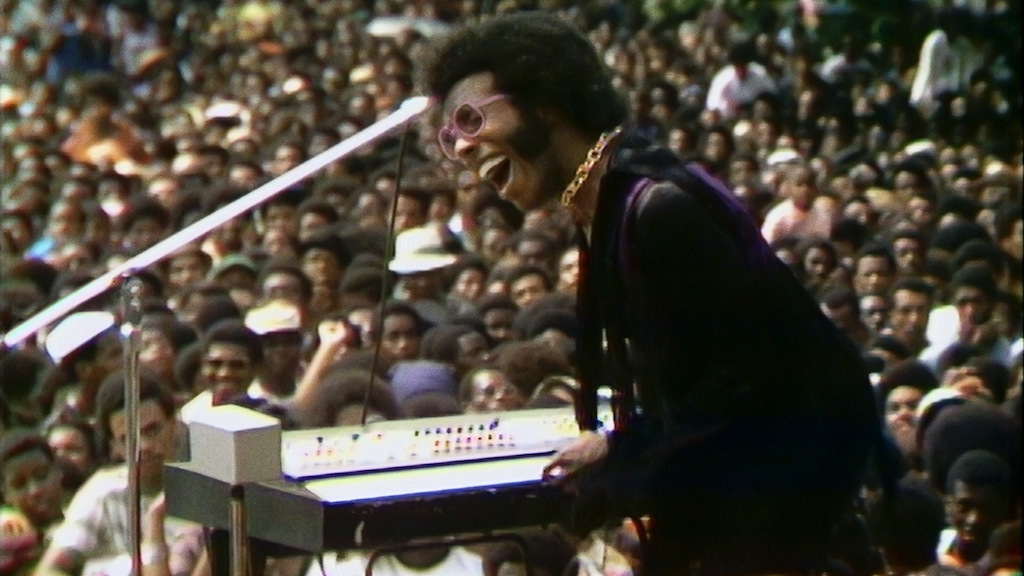
Sly Stone performs during the 1969 Harlem Cultural Festival. (Summer of Soul / Searchlight Pictures)
I found Summer of Soul tremendously moving — both exhilarating and enraging. Your results may vary, but there’s no way you can find it any less than incredibly interesting. The film’s parenthetical subtitle, ( . . . or, When the Revolution Could Not Be Televised), refers to the incendiary 1970 song “The Revolution Will Not Be Televised” by jazz musician and poet Gil Scott-Heron. It also refers to the fact that, until now, no audience has seen this film footage since it was recorded over fifty years ago.
Directed by Questlove, Summer of Soul assembles the long-lost footage of the 1969 Harlem Cultural Festival at Mount Morris Park, a six-part, six-week concert series free to all featuring some of the most awesome musical talent in the world: Nina Simone, Stevie Wonder, Mahalia Jackson, B. B. King, Sly and the Family Stone, Gladys Knight & the Pips, the Staple Singers, and on and on. There was a whole day of just gospel music, a whole day of Motown. The richness of the black music tradition in America is almost overwhelmingly expansive, encompassing blues, jazz, gospel, pop, rock, funk — and the global influences are so vast — that a sixty-part concert series could hardly have covered it.
The Black Panthers provided security, sidelining the police force. With a mostly black audience of up to three hundred thousand — young and old, elderly gents in sleek suits and hats and young hipsters in glorious afros and tight, low-cut jeans, and so many children, whole families there, some people sitting in the trees to get a better view — this epic event seems made to be remembered.