You Have to Watch Chadwick Boseman in Ma Rainey’s Black Bottom
Chadwick Boseman’s final performance in playwright August Wilson’s new Netflix adaptation of Ma Rainey’s Black Bottom is a haunting but appropriate farewell.
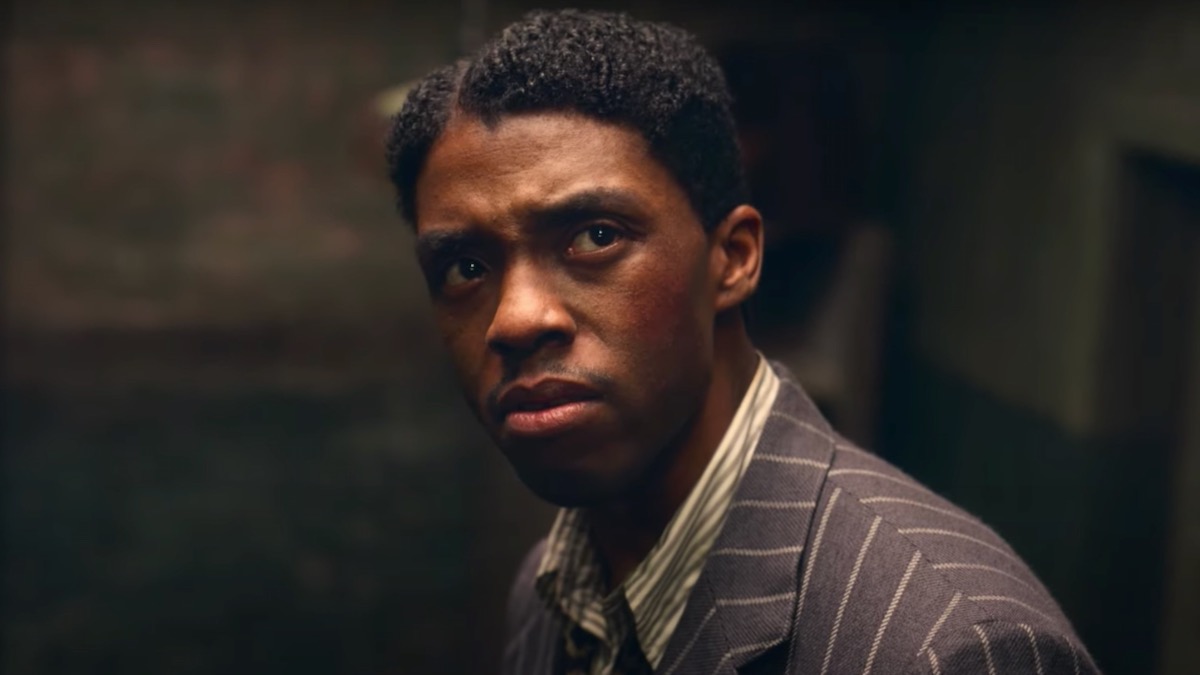
Chadwick Boseman as Levee in Ma Rainey’s Black Bottom. (Netflix)
You may not know that actor Denzel Washington has dedicated much of his career in the film industry to producing August Wilson’s plays, ten of which make up his “Pittsburgh Cycle.” Washington also directed and starred in Fences (2016), the first big-screen adaptation of Wilson’s, costarring Viola Davis, after both won Tonys for their performances in the 2010 Broadway revival of the play. And now Davis stars in the role of Ma Rainey, the “Mother of the Blues,” in the second production, Ma Rainey’s Black Bottom, now playing on Netflix and starring the late Chadwick Boseman.
Boseman died not long after giving his final, electrifying performance here as Levee, the trumpet player whose raging ambition puts him at fateful odds with Ma Rainey and his bandmates in one long, sweltering recording session in 1927 Chicago. It seems Boseman told no one involved in the project, including his producer (Washington), director (multiple Tony Award winner George C. Wolfe), and costars, that he was dying of colon cancer at age forty-three. “When I look back on it, I go, ‘Oh, that’s why he was tired between takes sometimes, or he had to go back to his trailer and reenergize,'” recalled Washington.
This awareness adds a posthumous layer of pain to the experience of an already excruciating work. Boseman’s performance as Levee is an agony to watch. His lean, grinning face and glittering eyes at the outset are lit with an unnerving overconfidence that frequently stuns his bandmates, who alternately mock, argue, and try to reason with his hubris. Because he knows how to deal with white people, Levee’s convinced he’s going to make the leap from jazz trumpeter to successful composer and bandleader in one single jump. He reveals this in a monologue that emerges from an angry outburst, sparked by mockery from his bandmates accusing him of deploying Uncle Tom behaviors to get what he wants.