The Defeat of Progressive Movements in the Global South Made US Hegemony Possible
Following the Vietnam War, global progressive movements sought to refashion the world in the interests of the majority. The failure of this project, and the subsequent triumph of liberal interventionism, explains the arrogance of the US foreign policy elite.
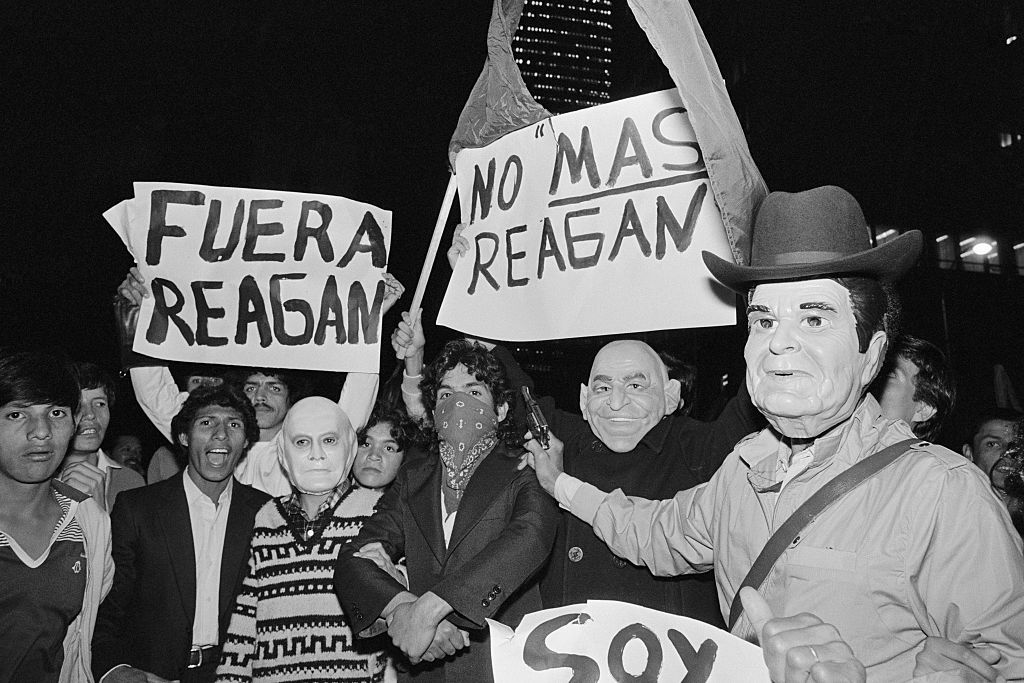
Demonstrators protest against Ronald Reagan in Colombia during his tour of Latin America, 1982. (Bettmann / Getty Images)
One of the more fascinating things to emerge from the Ukraine crisis — which, at the time of writing, appears terrifyingly on the precipice of war — is the miraculous restoration of the Biden administration’s confidence in American democracy. Gone is the gnawing fear of “a dagger at the throat” of the republic, as the president had put it on January 6. Instead, we’re treated to praise of “the power, resilience, and universal appeal of our shared democratic values.” These, Biden confidently suggested on February 15, can be counted on to “prevail.”
Such confidence — in both the durability of the American system and its universal appeal — is, of course, essential. Without it, how can the United States courageously defend what secretary of state Antony Blinken has called “the basic principles that sustain [global] peace and security”?
Undoubtably, the prospect of Russian military forces in Kyiv is unthinkable. However, one need not believe that the world should simply acquiesce to Russian demands to be startled by the hubris of American diplomats running to the ramparts of “freedom” and “national sovereignty” so swiftly and with such self-assurance.