How Mexico Reshaped the Global Economy
During the twentieth century, Mexican leaders shaped international institutions by demanding economic redistribution from wealthy countries to the Global South. But the system that emerged ultimately impoverished Mexico — and thwarted the ambitions of the decolonizing world.
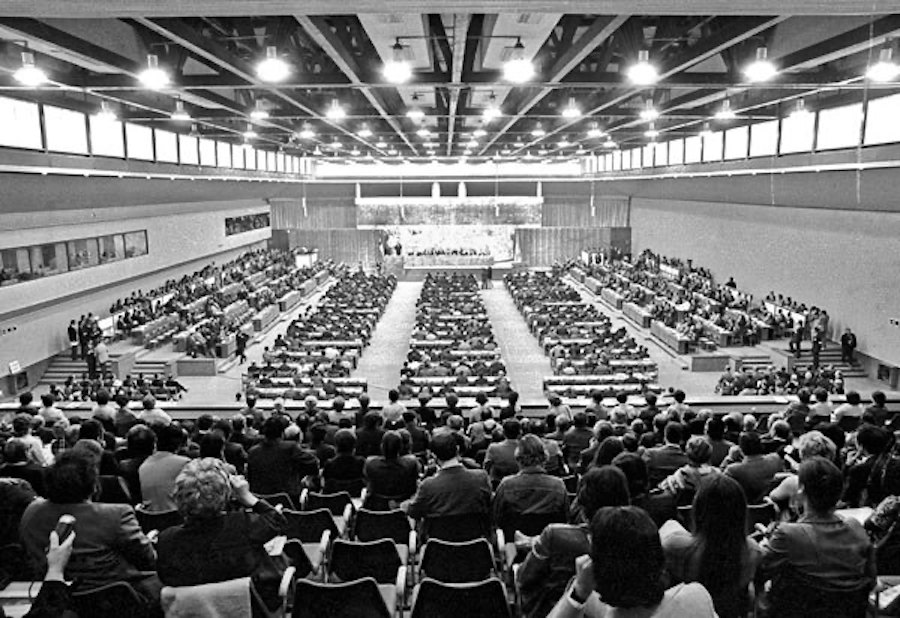
The inaugural ceremony for the third session of the United Nations Conference on Trade and Development in Santiago, Chile, where President Luis Echeverría of Mexico proposed the Charter of Economic Rights and Duties of States. (United Nations)
Only a generation removed from a world-historical revolution, Mexico enjoyed decades of sustained economic growth after World War II. But while many scholars have analyzed the country’s economic trajectory, fewer have investigated how Mexico shaped the international capitalist order itself.
A new book by historian and sociologist Christy Thornton, Revolution in Development: Mexico and the Governance of the Global Economy, adds a global dimension to the story of Mexico’s economic ascendance during the twentieth century — and its eventual ruin in the form of the 1982 debt crisis.
As Thornton shows, Mexico’s attempts to reform global economic governance played an important role in the formation of international institutions like the World Bank. But later, as Mexico became increasingly tethered to the international financial system it had helped create, the country’s radicalism eroded. By the 1950s and ’60s, Mexico was vigorously defending the prevailing system from new challenges posed by the decolonizing world.