The United States Is Not the World’s “Indispensable Nation”
The world needs new security arrangements to keep the peace. American "leadership" — the global dominance sought by the US national security establishment — is no substitute for those arrangements.
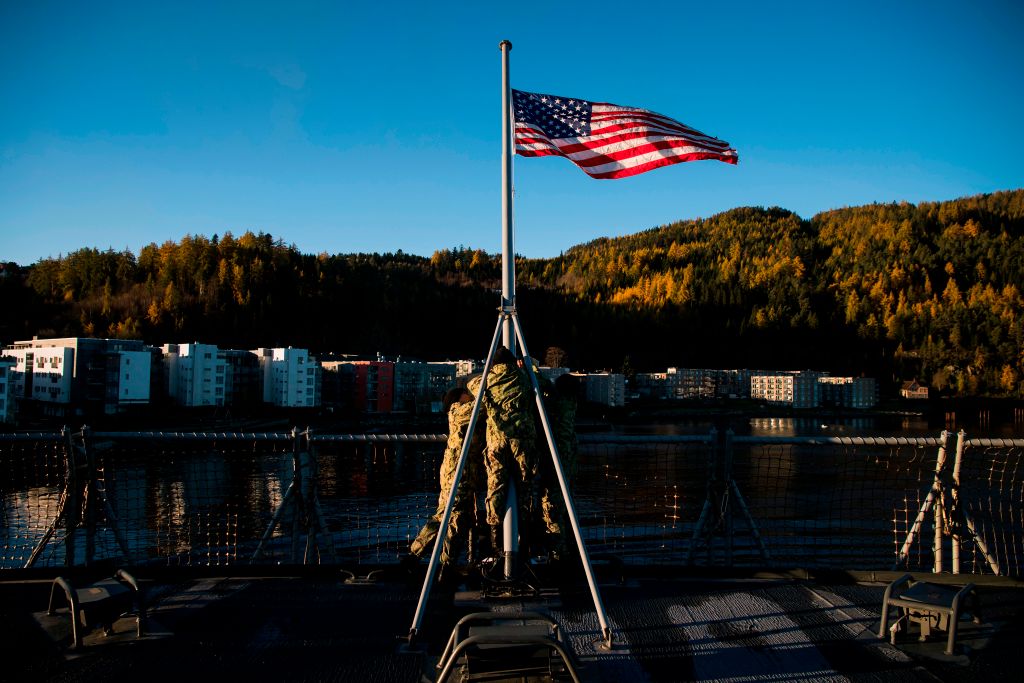
The US flag is being raised onboard the USS Mount Whitney of the US Navy during a NATO-led military exercise in Trondheim, Norway. (Jonathan Nackstrand / AFP via Getty Images)
The Russian invasion of Ukraine has upset the Western foreign policy equilibrium. Some who hope for a turn toward a more “muscular” US foreign policy have hailed it as a “turning point” — presumably hoping that the United States will be now more willing than in recent years to intervene in foreign military conflicts. But that assumes that the United States has been averse to such military solutions.
Few scholars have documented the extent of the US’s dependence on military solutions as prolifically as Samuel Moyn. Professor of jurisprudence and history at Yale Law School, Moyn’s recent book Humane: How the United States Abandoned Peace and Reinvented War (Farrar, Straus and Giroux, 2021) details the rise and persistence of America’s “forever wars,” conflicts that testify to the continued preference of US presidents and lawmakers for using the military as the primary tool of foreign policy rather than multilateral institutions and diplomacy.
Here Moyn address the prospects and challenges of building a global order that constrains rather than enables the use of force by military superpowers. His ultimate conclusion is that, while there will be obstacles to this project on the international stage, the work begins at home, by promoting a politics of peace and diplomacy, rather than ever-expanding military budgets.