Humanitarian Intervention Is a Cloak for Military Aggression
Despite the disastrous outcomes in Iraq and Afghanistan, supporters of US-led military intervention still claim war can be a humanitarian project. It can't.
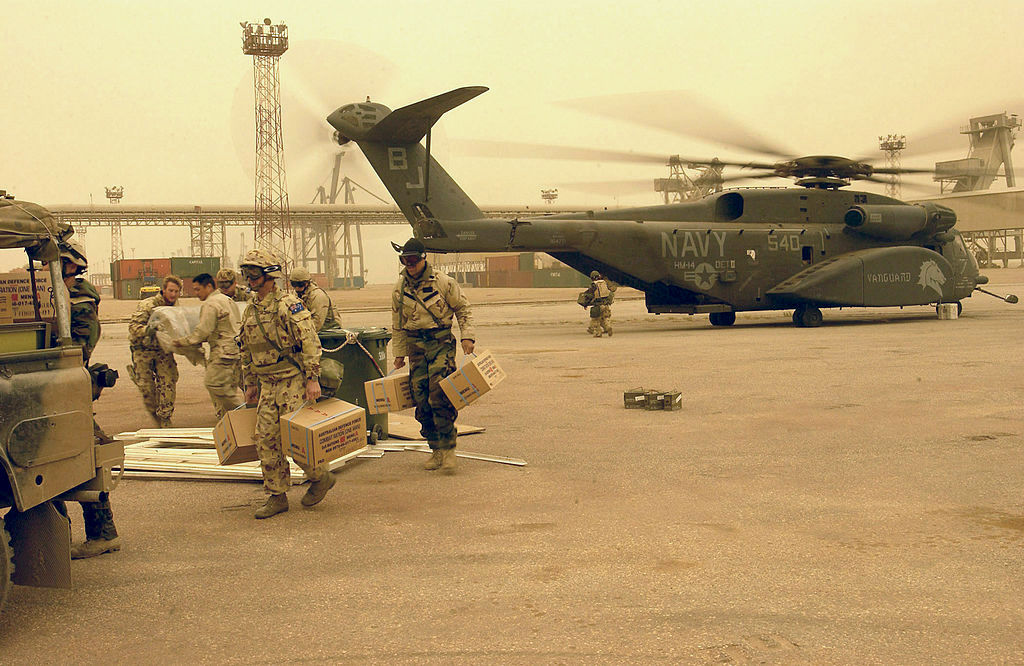
US Navy personnel unloads supplies from a Navy helicopter at the port of Umm Qasr, Iraq, 2003. (Bob Houlihan / US Navy / Getty Images)
During the late 1990s and the early 2000s, the doctrine of “humanitarian intervention” came to the fore as a justification for US-led military adventures in the Balkans and the Middle East. A number of recent events have revived our memory of those debates, from the ignominious US withdrawal from Afghanistan, just as the twentieth anniversary of the 9/11 attacks was approaching, to the deaths of leading Bush administration officials such as Donald Rumsfeld and Colin Powell.
For many people, the disastrous outcomes in Iraq and Afghanistan will be enough to discredit the idea of humanitarian intervention. But past experience suggests that the justification it offers for military action is too useful to be discarded by the United States and its allies. Such arguments may well be used in support for future wars. We still need to address and refute the case for “humanitarian” warfare on its own terms.
Balancing Rights
It is now generally accepted that all humans possess a basic set of rights, deriving from their status as moral beings who are owed such rights. In this respect, we must now see human rights as a trans-historical and transnational phenomenon, although they are a product of modern history.