Suharto’s US-Backed Coup in Indonesia Supplied a Template for Worldwide Mass Murder
Under the leadership of Sukarno, postcolonial Indonesia was an optimistic country finding its place on the world stage. Suharto’s 1965 coup drowned that experiment in blood, with US politicians and media cheering on his campaign of mass killings.
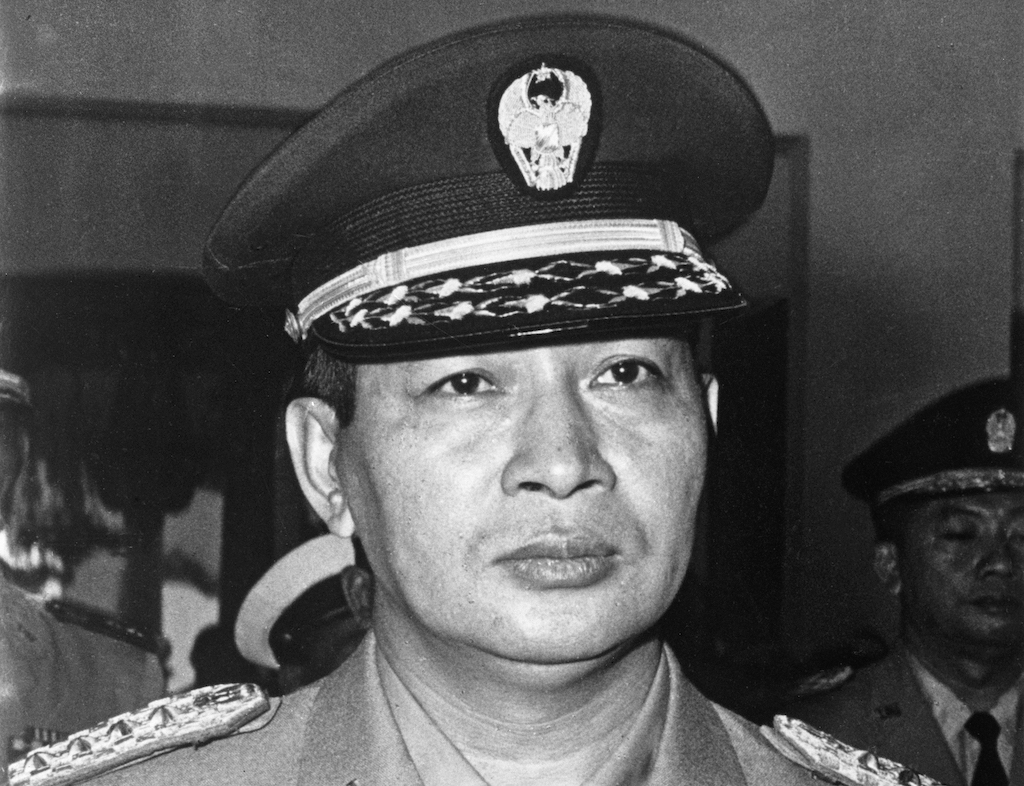
Second president of Indonesia, Suharto, 1967. (KEYSTONE-FRANCE / Gamma-Rapho via Getty Images)
After gaining its independence from the Netherlands in 1949, Indonesia was the world’s second-largest postcolonial state. At the Bandung Conference, its leader, Sukarno, joined forces with leaders from India, Egypt, and Yugoslavia to chart a new path in world affairs. Indonesia also had one of the world’s largest communist parties, with a mass membership and a network of allied organizations mobilizing workers, women, artists, and young people against the country’s dominant social classes.
It was the threat of social mobilization from below that prompted the Indonesian officer corps to stage a coup in 1965, followed by one of the century’s bloodiest massacres. Politicians in Washington openly celebrated this campaign of mass murder and gave it their enthusiastic support.
Michael G. Vann is a professor of history at Sacramento State University. This is an edited transcript from Jacobin Radio’s Long Reads podcast. You can listen to the episode here.