The Indonesian Counter-Revolution
The Indonesian genocide was one of the great crimes of the twentieth century. Its victims were leftists who struggled against colonialism and fought for Indonesian self-determination.
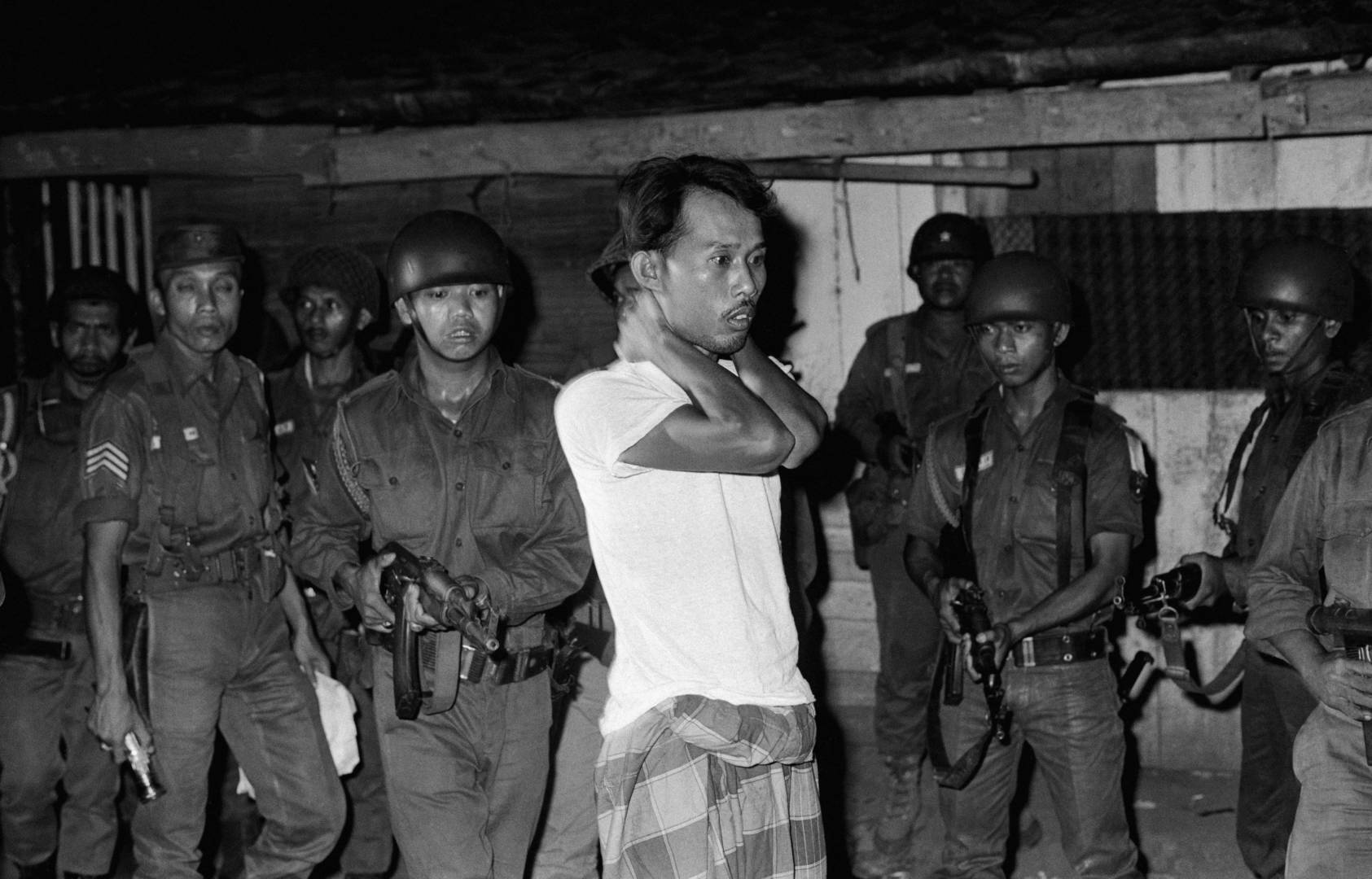
An alleged communist is questioned under gunpoint by Indonesian soldiers in 1965. (University of Melbourne)
In late 1965 and early 1966, a wave of violence swept Indonesia, directed at the country’s powerful left. Before it was over, half a million people lay dead and Suharto, a right-wing general who would rule the country for decades, had moved closer to power.
Vannessa Hearman’s Unmarked Graves: Death and Survival in the Anti-Communist Violence in East Java, Indonesia describes the impact of this mass slaughter and the little-known history of leftists’ attempts at resistance. Drawing on dozens of interviews, she shows the persecuted not just as faceless victims or representatives of abstract ideologies but living, breathing human beings. We learn what motivated them to join the movement, how they developed survival strategies — and how they tried to fight back.
The Death and Rebirths of the PKI
In the early 1960s, the Indonesian Communist Party (PKI) counted some 2 million members. Millions more were organized in allied mass organizations. In the 1955 elections — the last national contest before the massacres — the party finished with over 16 percent of the vote, and a few years later, it won almost 30 percent in East Java. The PKI and the movement around it was an important ally of Indonesia’s president, Sukarno, who combined fiery anti-imperialist rhetoric with autocratic rule.