The Pandemic Is Making the European Union More Integrated — And More Unequal
In recent years, the air of optimism surrounding the European Union has been replaced by continual crisis management. Yet the pandemic, the financial crisis, and Brexit have all spurred even further integration — and the Left lacks a coherent response.
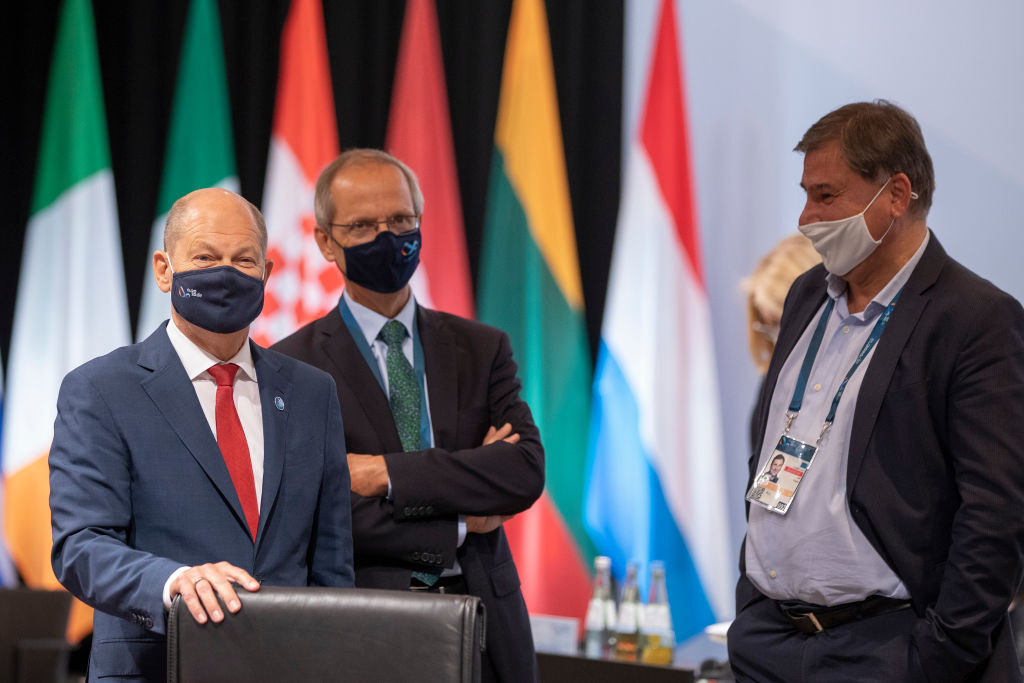
Finance minister and vice chancellor Olaf Scholz (L) during an informal meeting of European Union ministers for economic and financial affairs on September 11, 2020 in Berlin, Germany. (Maja Hitij / Getty Images)
According to French president Emmanuel Macron, the latest European Union summit was a “moment of truth.” The dramatic impact of such a statement might have been lessened a bit by the fact that he was simply repeating his own words from three months ago. This time, he was commenting on the marathon negotiations on a planned EU bailout package to answer the economic crisis caused by COVID-19 — talks starting on July 17 and concluding on August 23.
Such statements have been familiar to Europeans for decades now, as the continent has lurched from one crisis meeting to another. Yet, this time, the negotiations and their end result have revealed the bare truth of the European project — a continent of squabbling nations advocating for their national interests (as the interests of the businesses in those countries are commonly called), pushed from above toward federalization and a new superpower.
For a time, it was smooth sailing for European integration — the ever-closer union, the market-based European project that would, in the eyes of first its most far-reaching visionaries and then the wider European ruling class, lead to a European federation. It first proceeded from the European Coal and Steel Union to the European Community, then got a major boost from the fall of the Soviet Union, as the supposed death of ideology gave way to the idea of a European Union as a culmination of sensible cosmopolitan liberalism — a guardian of reasonably free minds and reasonably free markets after the end of fascism and communism.