No, Marxism Isn’t Economic Determinism
Critical theorist Axel Honneth accuses Marxism of having a narrowly economic idea of human emancipation. That’s wrong — and his own work could use a more structural understanding of social conflict and how progress really happens.
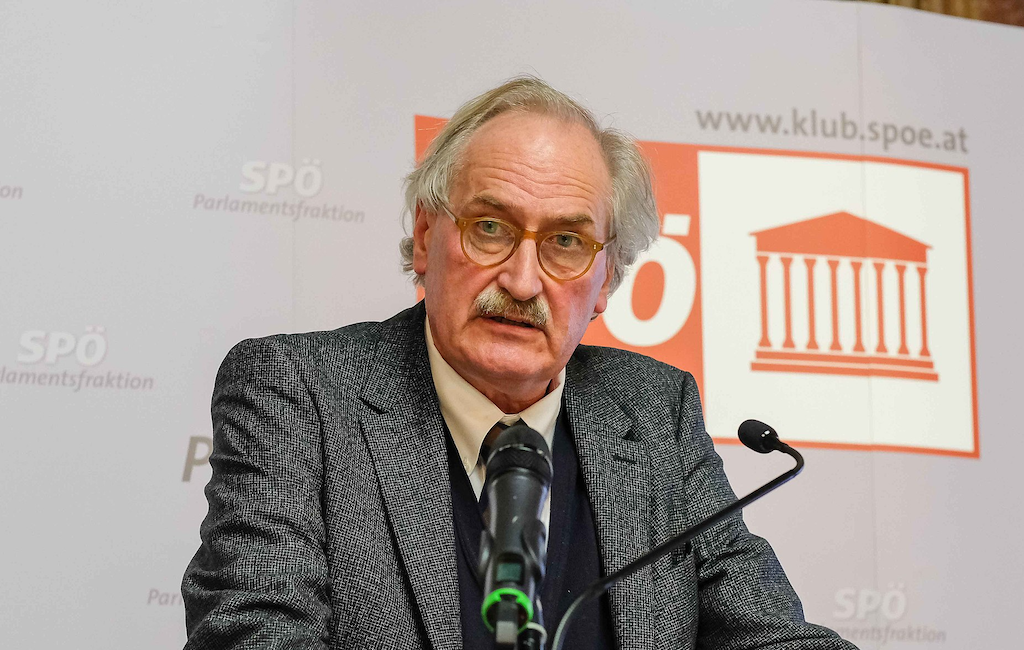
Critical theorist Axel Honneth’s dismissal of Marxian class struggle leads him to obscure the reality of domination and thus ignore the question of what to do about it. (SPÖ Presse und Kommunikation)
The Frankfurt School has renewed its interest in socialism. After a forty-year hiatus, its descendants are now willing to confront the fact that there must be an alternative to capitalism that emancipatory movements can strive for. As Axel Honneth writes his The Idea of Socialism, “widespread discontent has remained oddly mute and introverted . . . it simply lacks the capacity to think beyond the present and imagine a society beyond capitalism.” There is an emerging consensus that critical theory should reverse this trend.
Honneth’s shift is surely welcome. Indeed, he is one of the most influential critical theorists, having once followed in Max Horkheimer’s footsteps as the director of the famed Institute for Social Research in Frankfurt from 2001 to 2018.
This influence should also inform our evaluation of the direction in which Honneth is taking critical theory today. His legacy will have largely been to turn this tradition away from Karl Marx and toward Georg Wilhelm Friedrich Hegel. He has also taken a pragmatist turn in recent years, but at no point has he reconsidered his trajectory overall, which is to root critical theory in idealism. Yet others who want to rise to the immense challenge of imagining a noncapitalist society should indeed reconsider this approach.