Things Can’t Go on Like This for the German Left
After a catastrophic defeat in last Sunday’s general election, Germany’s socialist party Die Linke faces a choice: return to its working-class roots or face political irrelevance.
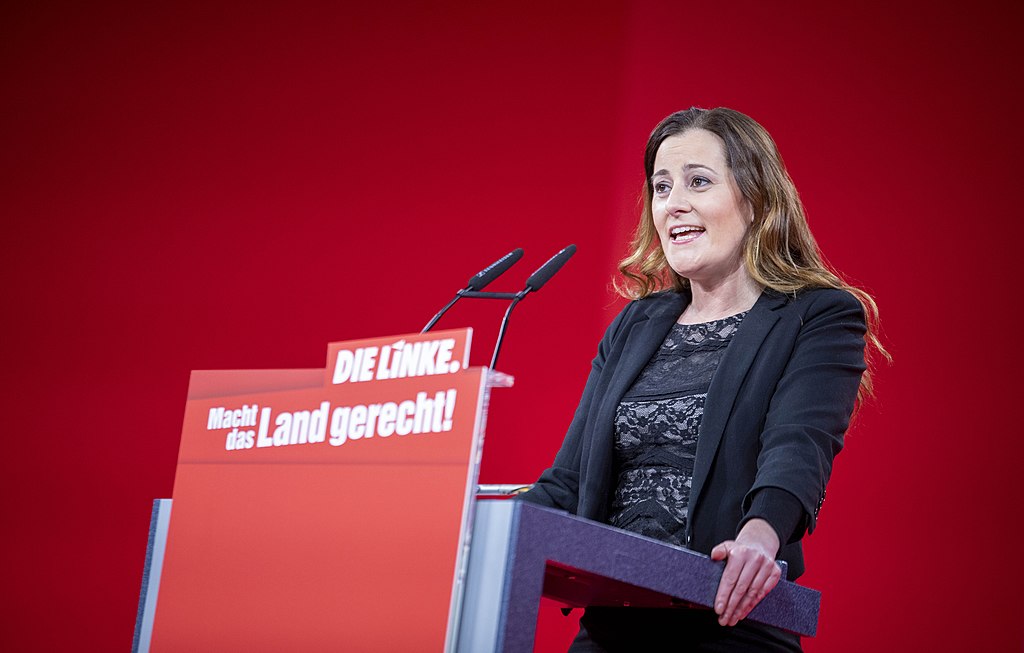
Janine Wissler, one of the coleaders of Germany’s Die Linke party. (Martin Heinlein / Die Linke via Flickr)
Sunday’s elections in Germany could certainly have turned out worse. For the first time in over two decades the left-liberal camp as a whole made gains: The Social Democratic Party of Germany (SPD) under Olaf Scholz and the Greens each gained more than 5 percent on their disappointing 2017 results, while the far right failed to make further inroads, its support declining slightly. In a simultaneous referendum on nationalizing the housing stock of large corporate landlords in Berlin, voters sent an unambiguous message to the entire republic. The campaign, ending in a 56 percent vote to nationalize, highlighted the excesses of a privatized housing sector and an out-of-control real estate market in large cities, which have become intolerable for most working-class people.
But no one on the broad left can be satisfied with the election result. In the run-up to the election, polls had predicted that a center-left coalition comprised of the Social Democrats, the Greens, and the socialist party Die Linke would be a numerically possible, albeit politically unlikely, option for Germany’s next government. In the end, “Red-Green-Red” ended up just five seats short of a majority in Parliament. Although the evening turned out to be somewhat disappointing for the Greens, the shortfall for Red-Green-Red primarily owed to a disastrous performance by Die Linke.
The party’s support was halved, from 9.2 to 4.9 percent — thus slipping below the 5 percent threshold to enter Parliament. Its continued presence with thirty-nine MPs (down from sixty-nine) is only assured due to a quirk of German electoral law: Because it won three first-past-the-post constituencies in Berlin and Leipzig, it was awarded the rest of its seat share according to proportional representation. Therefore, a few thousand votes in two Eastern cities saved it from near-total electoral obliteration on the federal level. All three districts were won thanks to personal votes for respected and well-liked figures such as Gregor Gysi, former chairman of the parliamentary group and leader of the opposition, who hoisted the dysfunctional party into Parliament once more.