Germany’s Electric Car Program Is About Defending Its Auto Giants’ Profits
Ahead of today’s German election, all the main parties have emphasized the need to green the auto industry. But the state’s strategic support for electric cars isn’t an attempt to save the planet — it’s about enhancing German capital’s supremacy over its foreign competition.
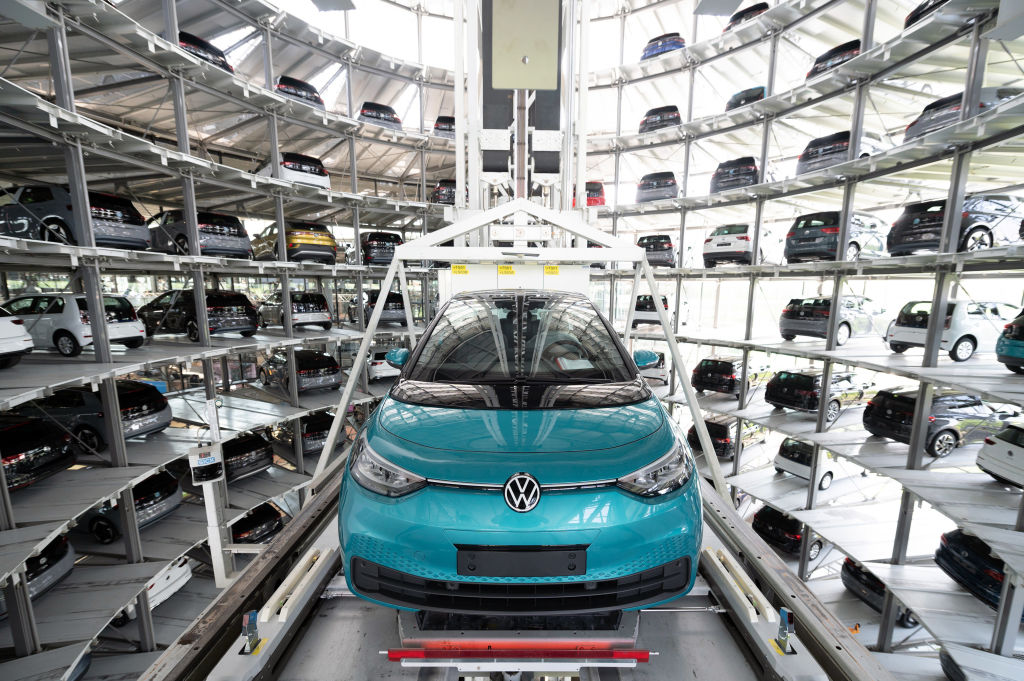
An electric Volkswagen manufactured at its Transparent Factory in Dresden, Germany. (Sebastian Kahnert / Getty Images)
Germany’s politicians have decided that the country ought to become carbon neutral. In the run-up to the general election on September 26, all parties have committed to this goal, with the hard-right Alternative für Deutschland the only exception. One key element in this program lies in the automotive sector, Germany’s key domestic industry. The auto companies and their suppliers haven’t called for climate protection — in fact, they aren’t too happy about the mooted changes. Their business model is mostly based on the resource- and energy-intensive manufacturing of diesel and gasoline vehicles, which run on fossil fuels. Instead, it’s mainly been start-ups such as StreetScooter — a firm which makes the cars for the German postal service — that have specialized in electro-mobility, thus occupying the economic niche of “sustainable mobility solutions.”
Nonetheless, today the German state aims for the total transformation of both auto production and the vehicles it churns out, in order to make them CO2-efficient and, ultimately, carbon-neutral. The problem is, this industry is supposed to make these changes out of its own business interests, but the new technology isn’t yet profitable for private firms.
The current German government’s Climate Action Programme 2030 clearly identifies the old fossil-fuel-centric technology as a model that’s about to be phased out. As it puts it,