Gandhi Led a Mass Movement for India’s Freedom — But He Also Constricted It
The movement led by Gandhi is a touchstone for advocates of non-violent resistance today. But the conventional view overlooks the limitations of Gandhi’s political philosophy, and the importance of insurrectionary struggles that he opposed in the fight for Indian independence.
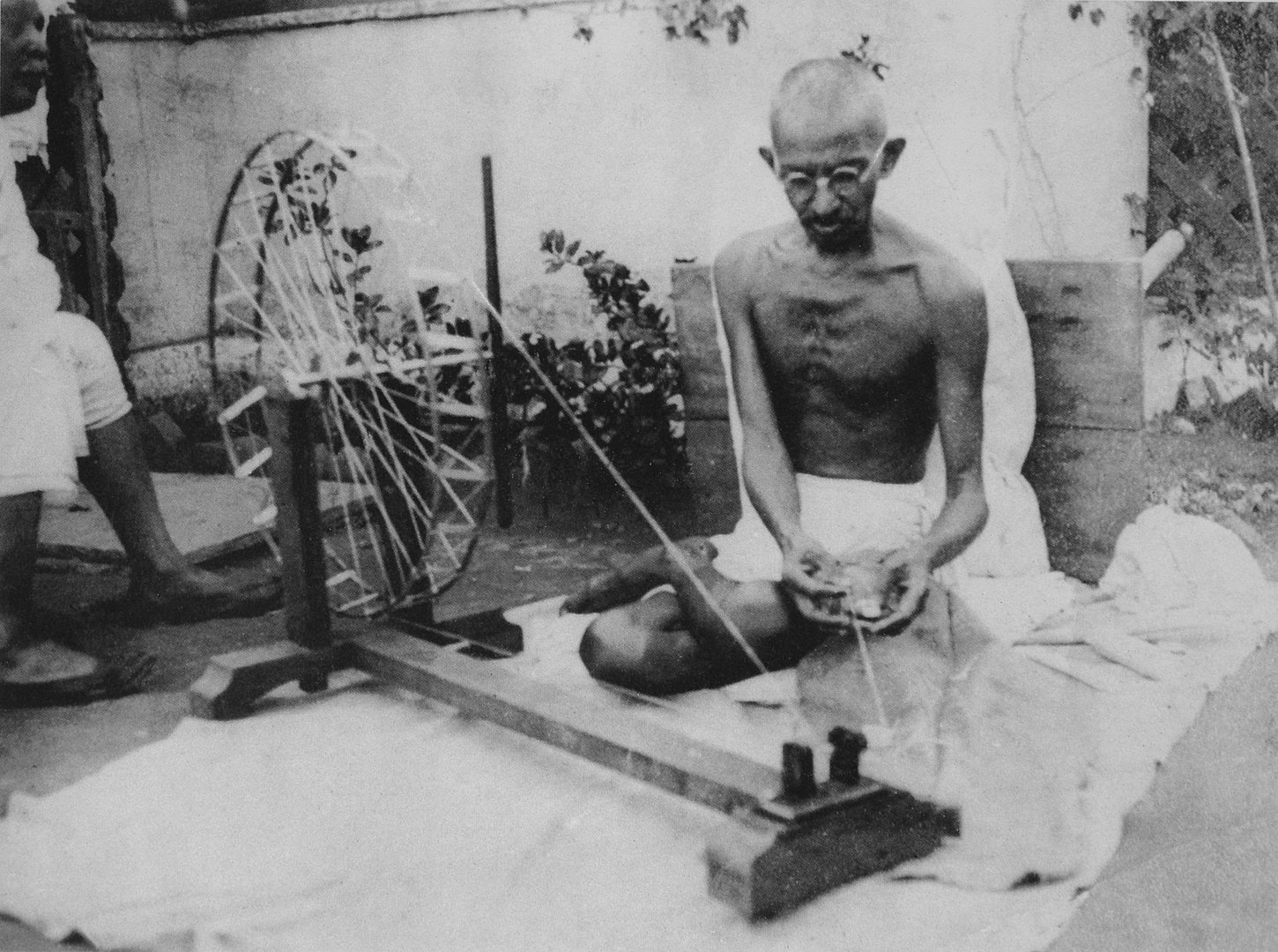
Gandhi spinning yarn in the late 1920s. Wikimedia Commons
In 1959, Dr Martin Luther King Jr travelled to India in order to pay homage to its founding father, Mohandas Karamchand Gandhi. King credited Gandhi with the ability to “mobilize and galvanize more people in his lifetime than any other person in the history of the world.”
This was a bold statement, but not an implausible one, especially when we consider the transnational dimensions of Gandhi’s civil disobedience strategy, which had clearly inspired King himself.
The initial test of Gandhi’s strategy had been in South Africa, where he lived for more than twenty years, leading struggles of Indians in Natal and the Orange Free State for civil and political rights. Nelson Mandela, who later received the International Gandhi Peace Prize, drew inspiration from Gandhi, seeing him as the “archetypal anticolonial revolutionary” who was “no ordinary leader — divinely inspired.”