Pedro Castillo Can Help End Neoliberalism in Peru
Peru heads for presidential elections on Sunday, when voters will have a choice between two very different candidates: left-wing trade unionist Pedro Castillo and far-right politician Keiko Fujimori.
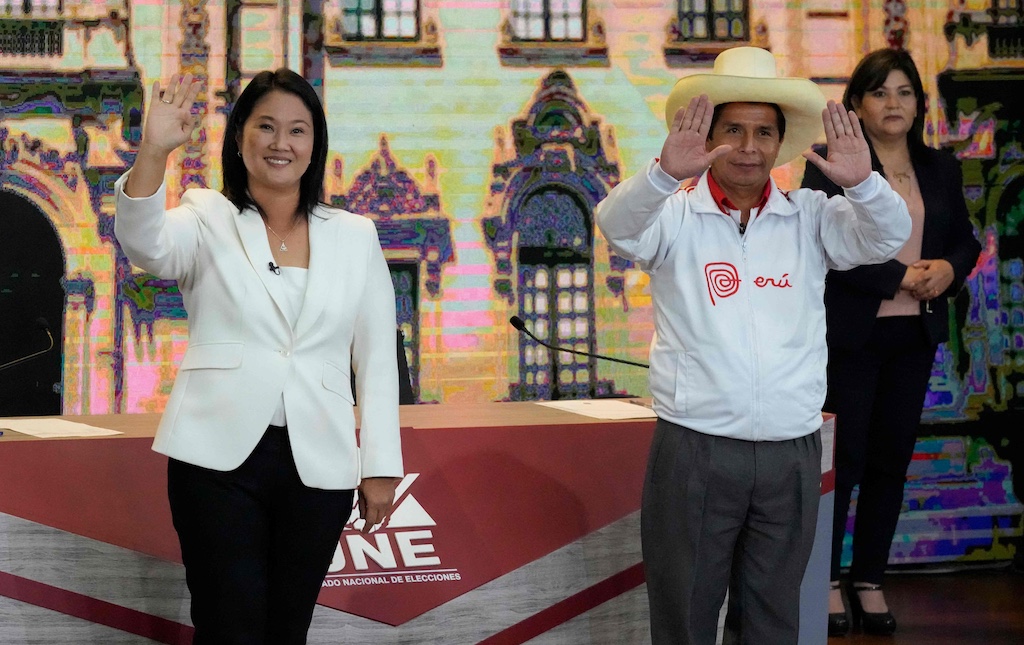
Peruvian presidential candidates Keiko Fujimori and Pedro Castillo wave at the end of the final televised debate in Arequipa on May 30, 2021, ahead of the runoff election on Sunday, June 6. (Martin Mejia / POOL / AFP via Getty Images)
Peru heads for presidential elections on June 6, when voters will have a choice between two very different candidates: left-wing trade unionist Pedro Castillo and far-right politician Keiko Fujimori.
Castillo was a relatively unknown figure when, in April 11, he took first place in the general election. A trade-union leader from a peasant background, he has drawn comparisons to Evo Morales, and the former president of Bolivia has eagerly endorsed Castillo’s candidacy. In the words of Morales: “Castillo has a program very similar to our own.”
Castillo’s right-wing opponent, Keiko Fujimori, has been less sanguine about the prospects of “twenty-first century socialism” coming to Peru. The daughter of dictator Alberto Fujimori, she has taken a page from her father’s playbook and launched a relentless red-scare campaign against her leftist rival, hoping to capitalize on the public’s lingering traumas from the bloody war against the Marxist-Leninist guerrilla organization the Shining Path.