A United Ireland Needs Economic Justice, Not Identity Politics
The Six Counties look closer than ever to reuniting with the rest of Ireland, and neoliberals are arguing for the new state to institutionalize Protestant-Unionist representation. But working-class people don’t need backward-looking identity politics — we need Ireland to stop being a low-wage tax haven.
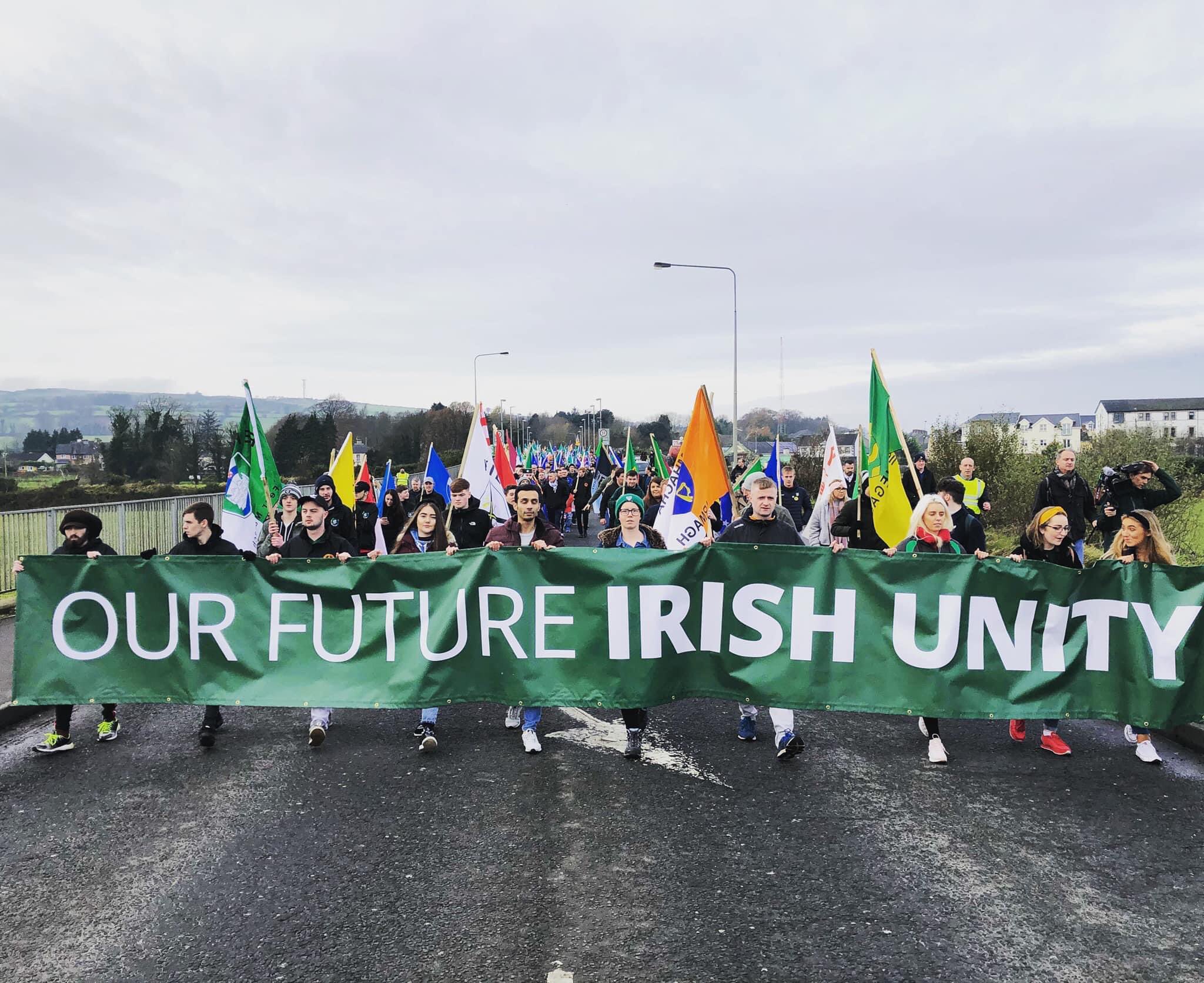
The situation in Northern Ireland is not the product of a centuries-long ethno-nationalist conflict, but rather of Britain’s desire to establish a loyalist stronghold in Ireland. (Photo: @IrishUnity)
For nearly a century, unification between the Republic of Ireland and the North has been the stuff of romantic folk ballads. These songs express a deep longing for a time when the Republic will reclaim the Six Counties — the “fourth green field” — even as actual unification has appeared a hopeless prospect. Catholics seeking a united Ireland and Protestants loyal to the United Kingdom have been in conflict for generations since the partition of 1921; even the 1998 Belfast Agreement that ended the Troubles achieved only a fragile peace.
This bloody history makes the present situation in Ireland all the more incredible. Today, unification is likelier than at any point since the creation of the Northern Irish state. Polling shows growing support for a united Ireland, especially among young people, while Time, the Economist, and the Financial Times are already speculating on what such a dramatic change might mean.
Unification is still far from assured. And even if it does come to pass, there is no guarantee that it will benefit the working class in either the North or South. That is why Kieran Allen’s 32 Counties: The Failure of Partition and the Case for a United Ireland is such a vital contribution to this discussion. Allen, a senior lecturer in sociology at University College Dublin, argues that left-wingers should draw inspiration from the legacy of James Connolly to achieve a socialist Ireland that transcends the paralyzing, limited visions of a Catholic or Protestant Ireland. And to do that, they must address a fundamental obstacle to unification: identity politics.