James Connolly, a Socialist for the Present
In his recent James Connolly lecture, Labour’s John McDonnell praised the Irish revolutionary as a formative influence on his politics. Connolly’s republicanism isn’t just of historical interest — it tells socialists how to think about democratizing society today.
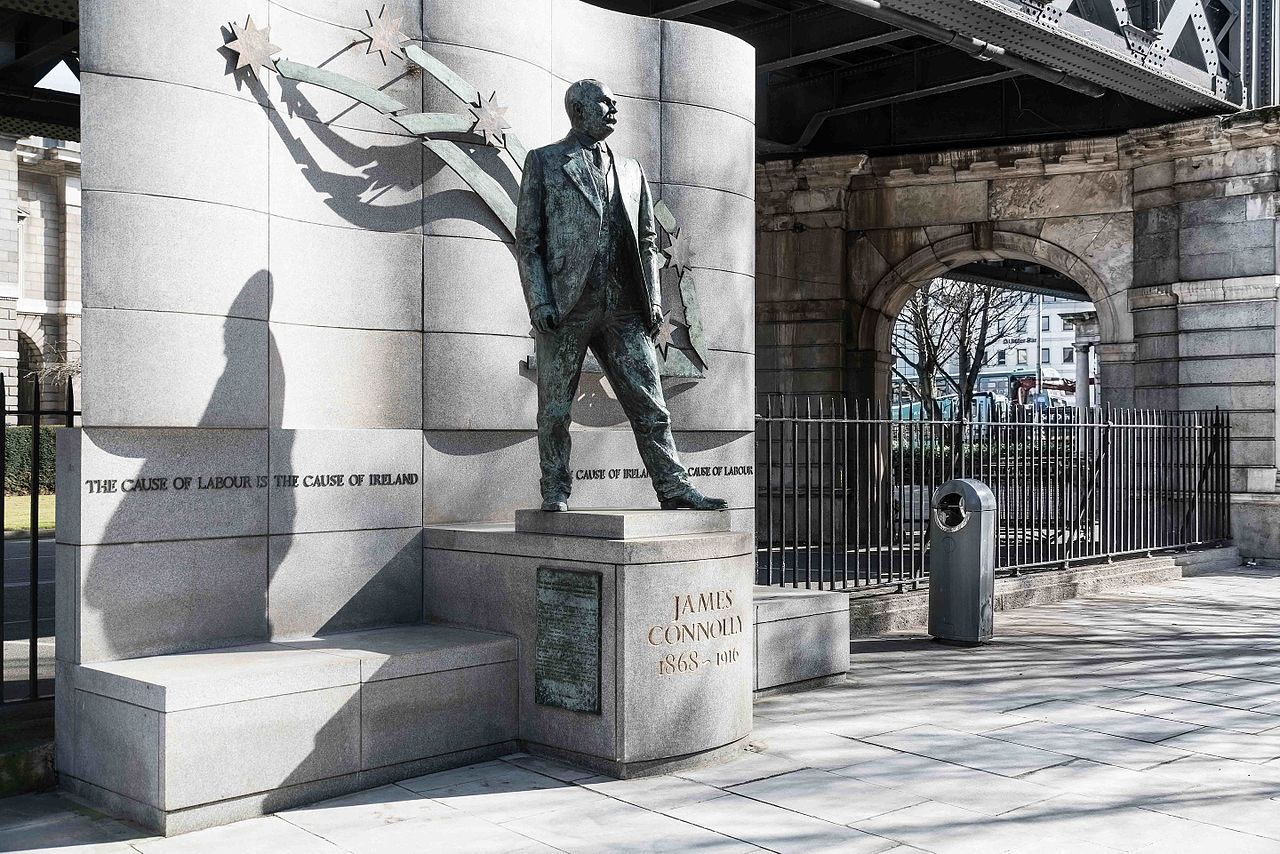
Statue of James Connolly, March 2016, Dublin, Ireland.William Murphy / Wikimedia
Even after being thrust from the margins of British political life to its center, Labour’s John McDonnell has hardly hidden his Marxist sympathies. There’s still much to learn from Marx’s Capital, the Shadow Chancellor declared in a 2017 interview on national television. But if Lenin and Trotsky were his inspirations on the backbenches, the likes of Joseph Stiglitz appear to figure more prominently as influences in his Shadow Treasury team. It’s striking, then, that last month McDonnell delivered the James Connolly lecture in Belfast, named after the great socialist leader of Ireland’s fight for independence.
In the lecture at the newly opened Connolly visitor center, McDonnell pointed to the Irish revolutionary as a figure formative for his own political development. He recalled how decades ago he read Connolly as well as Marx in an afterwork reading group in the basement of the Trade Union Congress (TUC) headquarters. For a socialist politician with a historic commitment to the Irish republican struggle, this was hardly a surprise. More impressive was the sharpness with which McDonnell appraised Connolly’s politics, highlighting the enduring relevance of his principles of cooperation, industrial democracy, and internationalism. He went further, to claim that these same principles are reflected in Labour’s mission today.
It was quite brilliant to see McDonnell — a politician now not so far from taking up the reins of the British state — asking what about Connolly’s politics lives on in Labour’s program. This, not only because it implies that, beneath the statesmanlike tones, McDonnell has lost little of his own radicalism, but more importantly because the Shadow Chancellor took Connolly seriously as a political thinker and theorist — something few scholars and historians have yet managed.