For Soviet Filmmakers, There Was No Glory in War
The Soviet experience of Nazi invasion inspired many powerful works of cinema. In contrast with Hollywood’s approach to World War II, Soviet filmmakers avoided triumphalist images of warfare, depicting the conflict as a brutal necessity that should never be repeated.
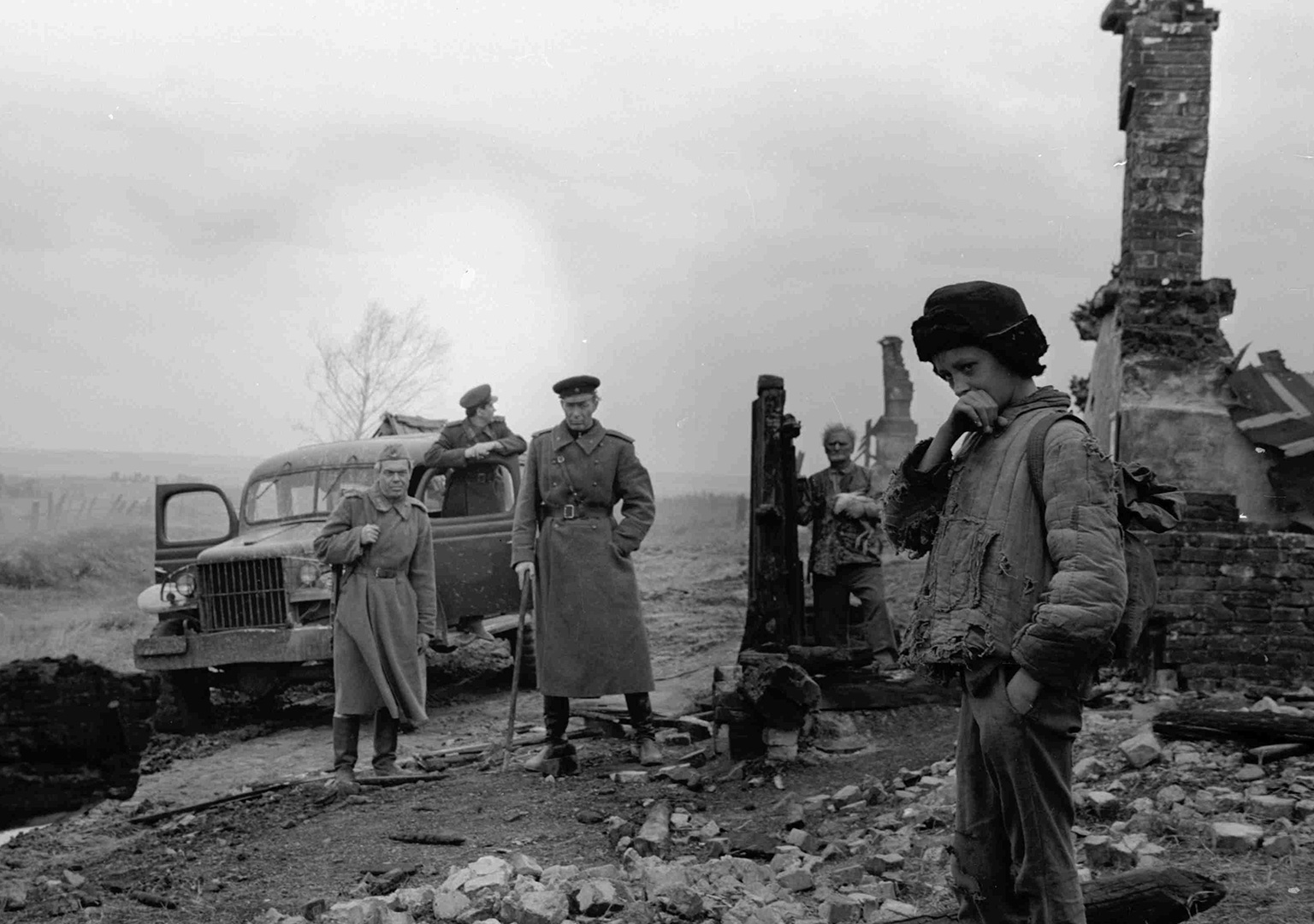
Still from Andrei Tarkovsky’s Ivan’s Childhood (1963). (Criterion Collection)
On New Year’s Eve 1940, my great-grandfather Aleksandr Afinogenov held a dinner party at his Moscow apartment. At one point the guests, probably writers and other literary intellectuals, played a game: writing on sheets of paper, they tried to predict what the coming year would be like. Some of them thought they’d change their hair color; others thought they’d get married or divorced.
But what about the bigger question: would the Soviet Union get involved in World War II? Some thought it would, and that the war would be won quickly — or even result in a revolution in Western Europe. Some thought it would end in defeat. But none of them could have anticipated how profoundly their lives would change when Nazi Germany invaded the Soviet Union on June 22, 1941. Afinogenov himself would be killed in a shelling by the end of the year. The Germans were already within artillery range of Moscow, and the future of the Soviet Union was in doubt.
“On that June morning . . . everything seemed so simple, so ordinary,” says the Soviet filmmaker Mikhail Romm in his 1965 documentary Ordinary Fascism: