Francesco Misiano, the Italian Communist Who Brought Battleship Potemkin to the West
The Italian Communist Party was founded 100 years ago today. One of its most remarkable early militants was Francesco Misiano — a keen internationalist who fought gun in hand in the German Revolution before becoming a leading light of Soviet cinema.
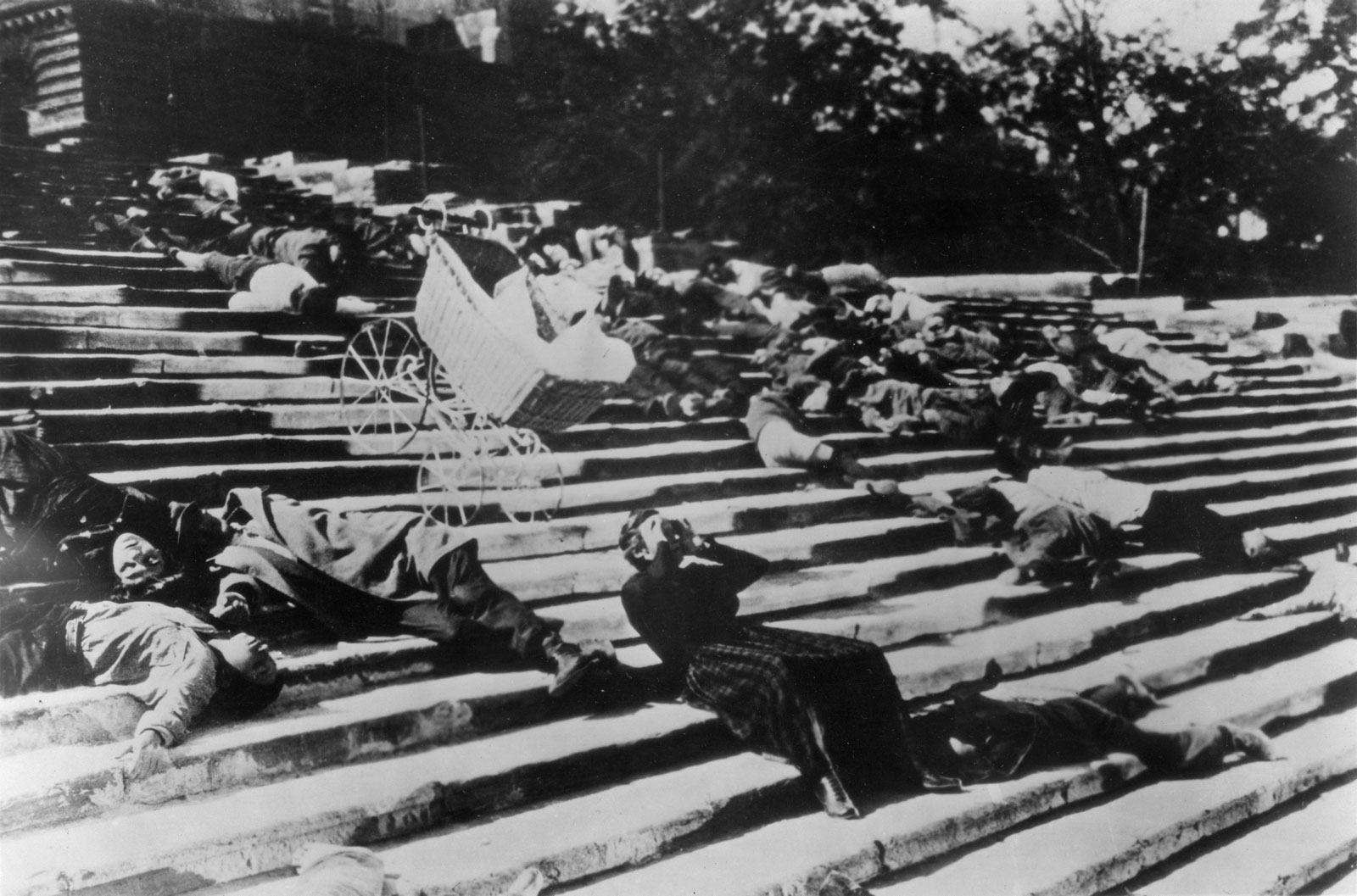
Scene from Sergei Eisenstein’s Battleship Potemkin (1925).
Escaping the murderous fury of nationalist poet Gabriele D’Annunzio’s arditi, forerunners of Mussolini’s Blackshirts, Francesco Misiano was driven at tremendous speed through the fabulous Istrian landscape. As his daughter Carolina later recalled, his rescuer, the Hungarian revolutionary Margherita Bluch, remarked that this was a perfect scene for a film. Bluch had fought together with Misiano during the Berlin Spartacus uprising of 1919. But she could have had little idea that her fellow passenger would himself play an important role in the history of world cinema. For Misiano brought Battleship Potemkin to the West in his luggage — and became a leading light of the USSR’s most impressive film studios.
Of the militants who founded the Italian Communist Party (PCI) in January 1921, few led such extraordinary lives as Misiano. Yet apart from a biography published in Italy in 1972, attempts to pull together the different threads of his life have been rare. Other protagonists of the PCI’s foundation left a theoretical legacy of real significance (as in the case of Antonio Gramsci and Amadeo Bordiga), left their stamp on Italian history (like wartime leader Palmiro Togliatti), or became household names among communist militants. Misiano’s legacy is rather more complex — and not reducible to a body of writing or thinking.
Ironically, it seems that the only footage that we have of Misiano is that showing him sat beside Hollywood superstars Douglas Fairbanks Jr and Mary Pickford during their trip to Moscow, which he organized. Misiano’s career in film as a prominent figure of the Mezhrabpom “Red Dream Factory” in Moscow and the Spartacus film company in Berlin has inspired much of the attention he has received in Italy in recent years. Yet the biography of this towering figure is rich in moments with contemporary resonance, worthy of rediscovery. If there is a thread running through Misiano’s story, it is the centrality of international human solidarity. In this sense, the Italian Communist’s biography offers us an opportunity to question many of the dominant myths about twentieth-century history.