The Forgotten Socialist Filmmaking of Slatan Dudow
- Loren Balhorn
Slatan Dudow's cinematic career took him from rural Bulgaria to working with Bertolt Brecht — making him one of the twentieth century’s most important socialist filmmakers. Yet the director's work has undeservedly been forgotten.
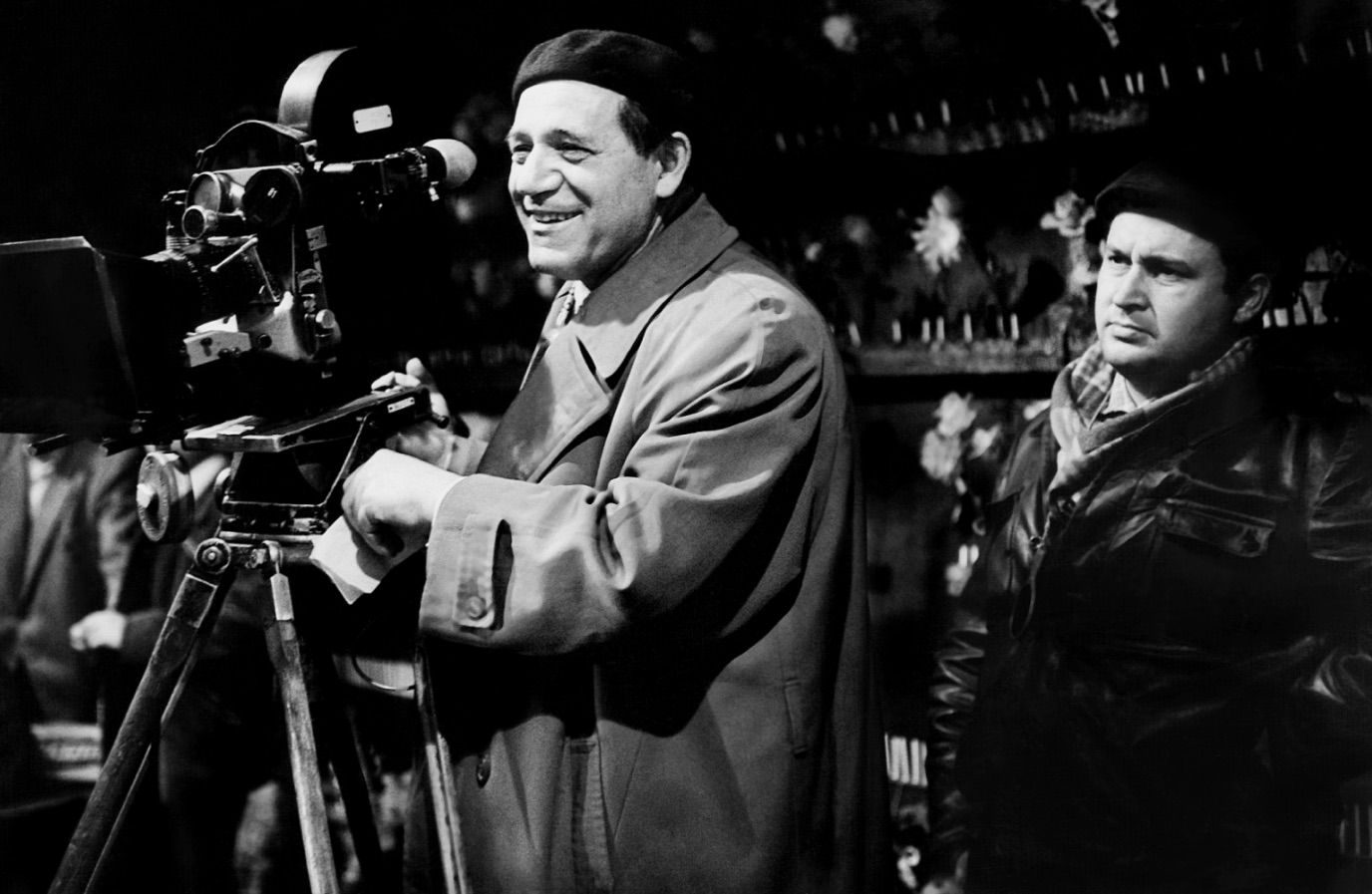
Slatan Dudow (L) and his cameraman Helmut Bergmann (R) on the set of Christine in 1963. (Herbert Kroiss and Waltraut Pathenheimer / DEFA Foundation)
The films of director and screenwriter Slatan Dudow (1903–1963) are rarely discussed today. Yet some of his films belong to the canon of German and international film history, while others were considered groundbreaking works by his contemporaries. Dudow conjured up succinct images that left a lasting impression through their harsh clarity, exaggerated caricatures, and, quite often, sensitivity to the everyday lives of ordinary people. Thematically, he focused on the living conditions of the German working class, the delusions and confusions of the petite bourgeois “little guy” and unreformed ex-Nazis, the struggle against fascism and for the reconstruction of Germany, and the emancipatory prospects of youth. Always political and socially critical, his films prompted a number of public debates to which Dudow himself often contributed with his own impassioned arguments.
Slatan Dudow’s most well-known work is probably the 1932 film Kuhle Wampe, or Who Owns the World?, released in the United States one year later under the title Whither Germany? It remains one of the most important “proletarian” films of all time and is often mentioned alongside movies like Piel Jutzi’s Mother Krause’s Journey to Happiness or Sergei Eisenstein’s revolutionary films Strike and Battleship Potemkin. The many differences between these directors notwithstanding, all three shared the goal of using cinema to not only raise awareness of the social injustices of their era but actively contribute to remedying them by influencing the consciousness of their audience.
Similar motivations were behind the founding of the Deutsche Film-Aktiengesellschaft, or DEFA, on May 17, 1946, in Babelsberg, a district of Potsdam. As the first major postwar German company devoted to producing films, the publicly owned enterprise had a monopoly on cinematic production in the Soviet-controlled zone and later the German Democratic Republic (GDR). Prior to its dissolution after German reunification, the studio churned out an enormous catalog of roughly 700 movies, 2,000 documentaries, 950 animated films, and 6,700 German-language dubs of foreign productions, preserved in the DEFA Film Library at the University of Massachusetts. This year, it would have celebrated its seventy-fifth anniversary.