Omar Blondin Diop’s Death Showed the Horrors of Neocolonialism
48 years ago, Senegalese leftist Omar Blondin Diop died in detention under suspicious circumstances. His death triggered widespread outcry against Western-backed state repression — and it laid bare the violence of neocolonialism.
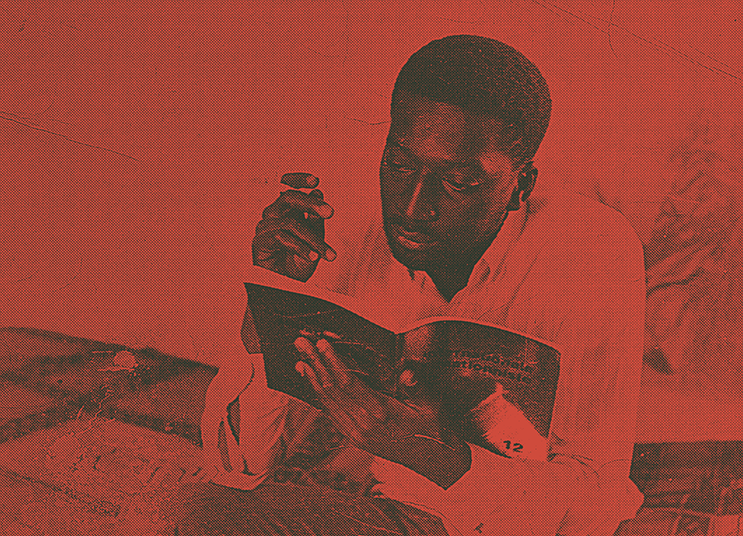
Detail from a screen print series depicting Omar Blondin Diop reading the twelfth issue of Internationale situationniste (1969), Dakar, circa 1970, Quincunx, 2018. (Vincent Meessen via Bouba Diallo)
In June 2020, a few weeks after the murder of George Floyd, Senegalese graffiti collective Radikal Bomb Shot painted a colossal mural in the capital, Dakar, in memory of black liberation fighters from around the world. Alongside pan-Africanist Cheikh Anta Diop and abolitionist Harriet Tubman, Omar Blondin Diop is depicted, cigarette in hand, reading historian Amzat Boukari-Yabara’s Africa Unite! A History of Pan-Africanism.
The photograph that inspired this spray-painted portrait dates from 1970, shortly after Blondin Diop’s expulsion from France for his involvement in the May ’68 protests. Five years later, when he died in prison in Senegal, he was more than a radical dissident — he was a martyr.
Senegalese authorities claimed Blondin Diop, fourteen months into a three-year sentence for “being a threat to national security,” committed suicide. Most had good reason to suspect he was murdered. Ever since, his family has demanded justice be done, and artists and activists have taken the lead in holding on to Blondin Diop’s memory.